Is PFAS in Your Drinking Water? What DMV Residents Should Know
What the science says, what’s in DC-area tap water, and why DrinkMore Water contains none.
What Are PFAS, and Why Is Everyone Talking About Them?
PFAS — short for per- and polyfluoroalkyl substances — are a family of thousands of synthetic chemicals that have been used in manufacturing since the 1940s. You can find them in nonstick cookware, water-resistant clothing, food packaging, firefighting foam, and countless industrial processes.
The reason they’ve become a major public health concern is right there in the nickname: “forever chemicals.” PFAS don’t break down in the environment or in the human body. They accumulate over time, and research increasingly links long-term exposure to serious health effects.
Why the DMV region is especially at risk: The DC metro area sits near multiple military installations that historically used PFAS-containing firefighting foam. Residue from those sites has migrated into regional groundwater and, in some cases, public water supplies.
Environmental Working Group (EWG) maintains an interactive map of known contamination sites. As of March 2026, EWG reports that 176 million people in communities throughout the U.S. have drinking water that has tested positive for PFAS. View the EWG PFAS contamination map.
According to the U.S. Environmental Protection Agency and the Agency for Toxic Substances and Disease Registry (ATSDR), health effects associated with PFAS exposure include:
- Cancer risk: Increased risk of kidney and testicular cancer, among others
- Thyroid disease: Hormonal disruption affecting metabolism and development
- Cardiovascular effects: High cholesterol and heart-related impacts
- Immune suppression: Weakened response including reduced vaccine effectiveness
- Child development: Developmental issues in infants and children
- Pregnancy complications: Including preeclampsia and low birth weight
How Does PFAS Get into Drinking Water?
PFAS enter water supplies through several pathways. Industrial discharge and runoff from manufacturing plants introduce chemicals directly into rivers and groundwater. Firefighting foam used at military bases and airports — particularly a type called AFFF — is one of the most significant sources of PFAS contamination in the mid-Atlantic region.
Once in a water source, PFAS are notoriously difficult to remove with standard treatment methods. Conventional filtration, sedimentation, and even basic carbon filters often fail to fully eliminate them. That’s why source matters — and why purification technology matters even more.
For your viewing — “Dark Waters” (2019). The Mark Ruffalo film that brought the PFAS crisis to mainstream attention. Based on the true story of attorney Rob Bilott, who spent decades fighting DuPont over PFAS contamination of West Virginia’s water supply. A must-watch for anyone who wants to understand how “forever chemicals” became a global crisis. Watch the official trailer on YouTube.
The 15 PFAS Compounds We Were Tested For
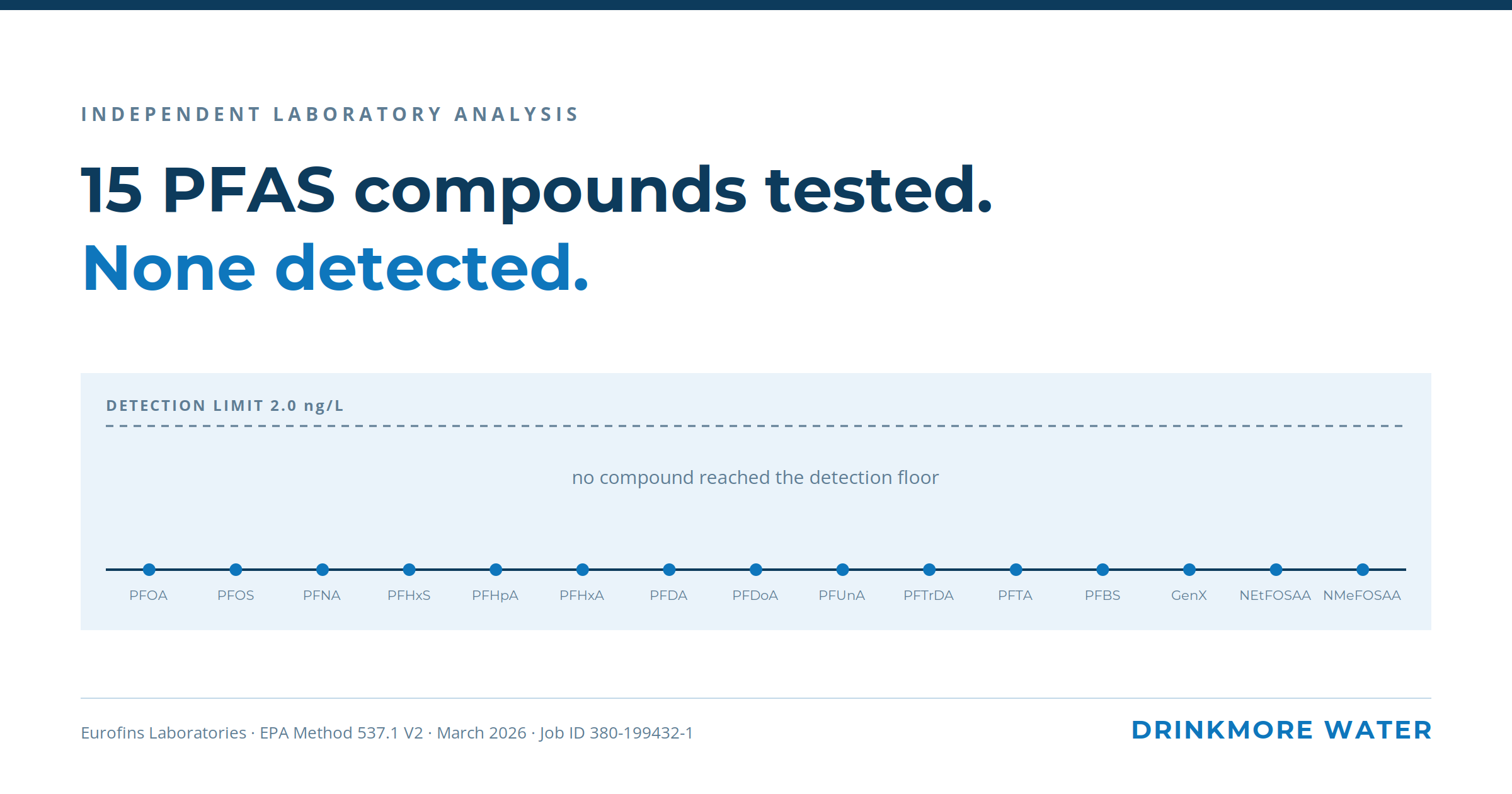
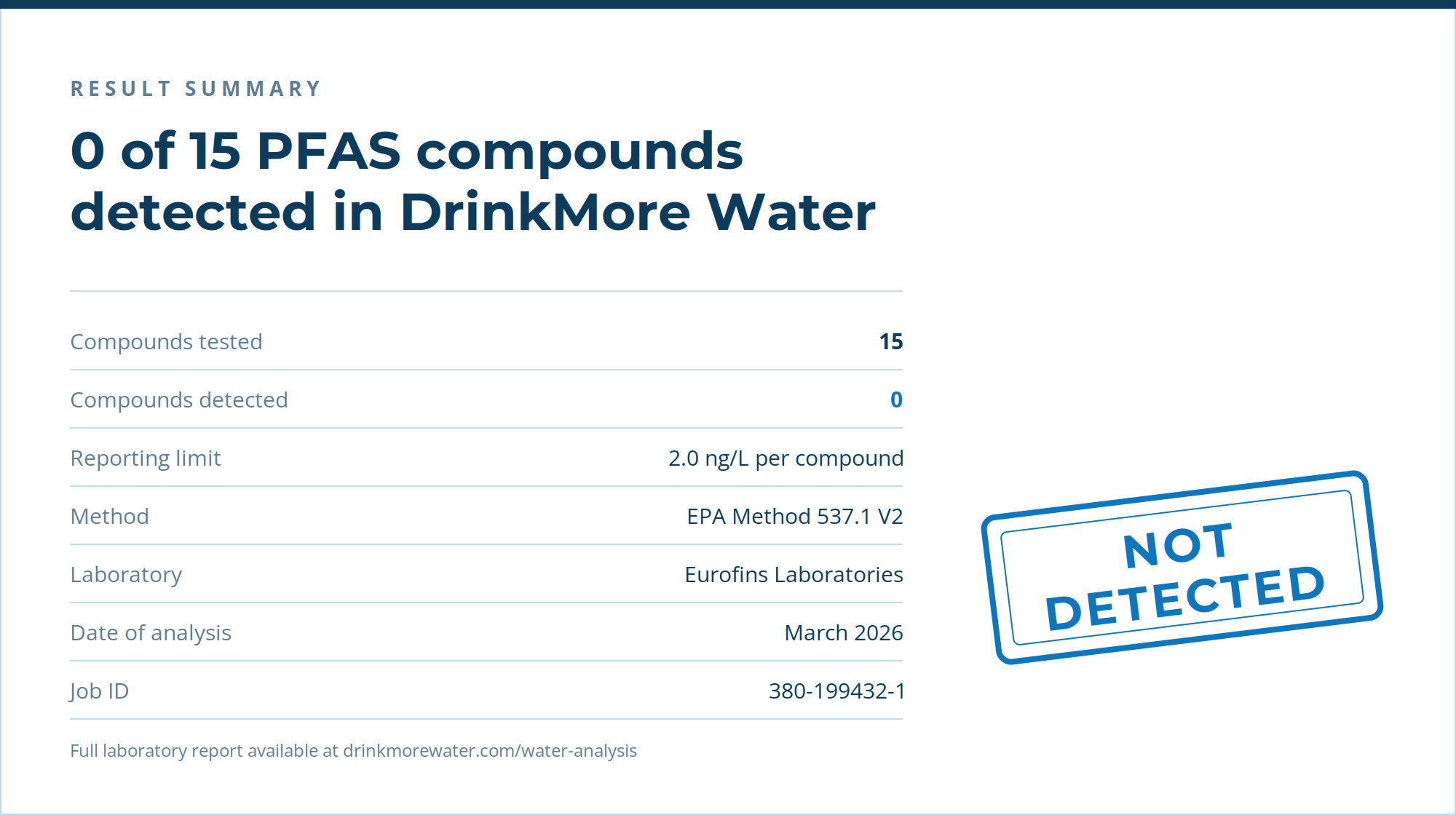
In March 2026, our water was independently tested by Eurofins Laboratories — one of the largest and most accredited environmental testing networks in the world — using EPA Method 537.1, the gold standard for PFAS detection in drinking water.
Here is every one of the PFAS compounds we were tested for:
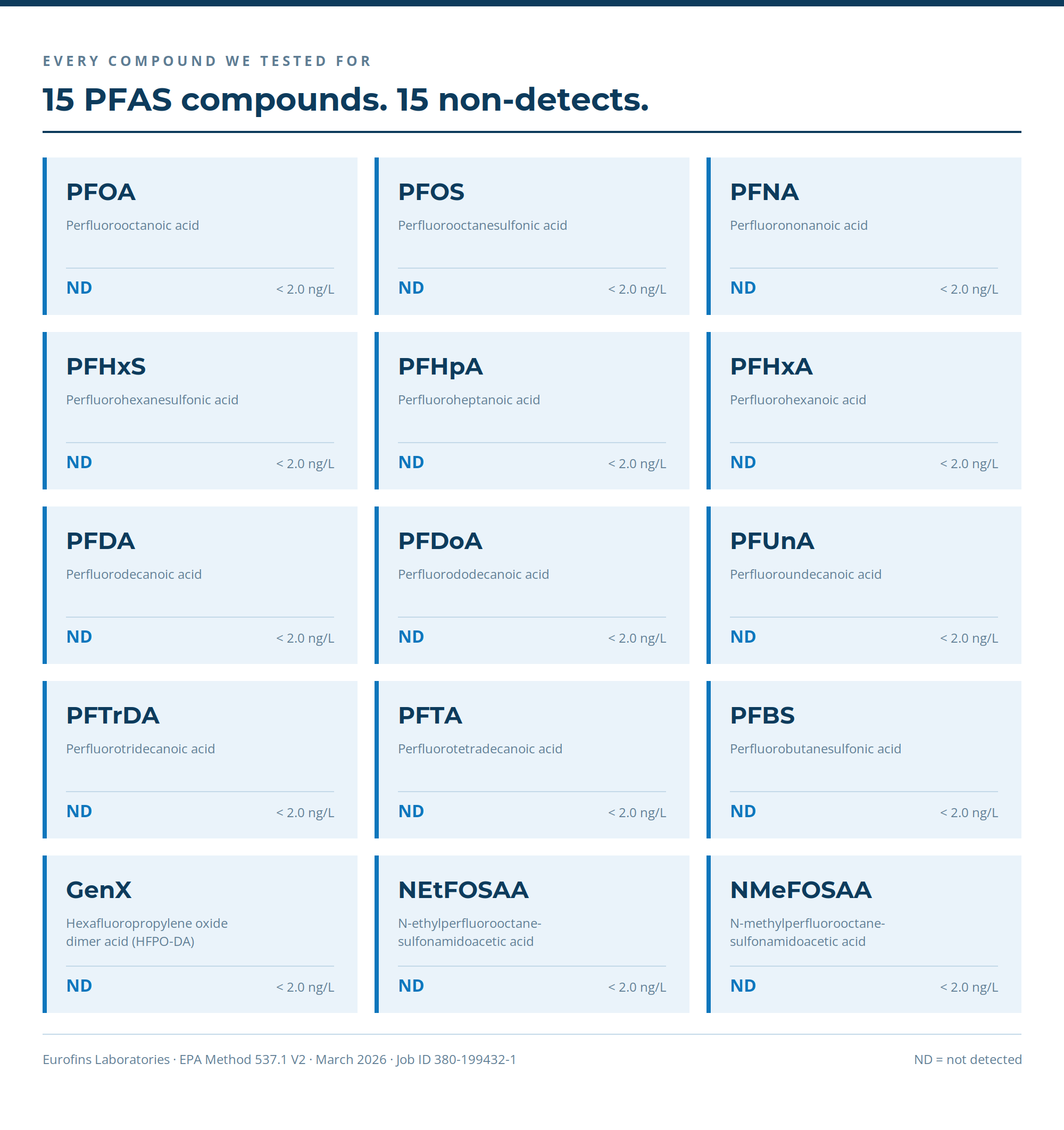
Every single PFAS compound tested came back Not Detected — at the lowest measurable limits current science allows.
Tested via EPA Method 537.1 V2 · Detection limit: 2.0 ng/L per compound · Job ID: 380-199432-1
Why DrinkMore Water Tests Clean
We don’t start with tap water and filter it. We start with tap water and transform it — using a custom-engineered, multi-stage purification process that includes reverse osmosis, one of the only technologies proven to effectively remove PFAS at the molecular level.
Reverse osmosis works by forcing water through a semi-permeable membrane with pores so small they reject virtually everything that isn’t a water molecule — including PFAS compounds. Combined with additional filtration stages and UV treatment, our process removes 99.5% of all detectable impurities.
The result isn’t just water that meets federal standards. It’s water that exceeds them — with third-party proof to back it up.
We test daily. Our FDA-licensed facility in Gaithersburg, MD conducts continuous quality monitoring throughout the day, every day — with additional independent third-party testing to confirm our results.
Common Questions
Does my DC, MD, or VA tap water contain PFAS?
DC Water has reported that PFAS levels are currently below EPA maximum contaminant levels. However, the EPA’s PFAS standards finalized in 2024 are far stricter than previous limits, and independent testing has found PFAS present in the region’s source water, the Potomac River. It is always important to remember that “below the legal limit” is not the same as “not present.”
Does a standard Brita or faucet filter remove PFAS?
Most standard pitcher and faucet filters are not certified to remove PFAS. Activated carbon filters can reduce some PFAS compounds but don’t eliminate them. The most effective technologies are reverse osmosis and high-grade carbon block filters — both of which are part of our purification process.
How often do you test for PFAS?
We conduct comprehensive annual testing through an accredited independent laboratory, with this most recent round completed in March 2026. We publish our full water analysis report on our website because we believe our customers deserve to see the data — not just take our word for it.
Is bottled water always PFAS-free?
Not necessarily. The FDA regulates bottled water, but testing rigor varies widely by brand. Some bottled water is simply repackaged municipal tap water with minimal additional treatment. DrinkMore Water is locally purified, continuously tested, and independently verified — so you know exactly what’s in every bottle.
Drink Water You Can Trust
Zero PFAS. Zero guesswork. Delivered to your door in DC, MD & VA.
What to Expect
Discover the Difference

30 years Experience

Fast Turnaround Time

Excellent Customer Service

State-Of-The-Art Purification

Made in the USA

Delivered to you!
Testimonials

“10 out of 10. Delivery guy is the best!”
“Excellent water, excellent service all around! Have been using them for years.”
“Very reliable company. Delivers as promised.”
“Everyone here is always nice and accommodating. Never waited and I get unloaded quickly.”
Request Form
We would love to hear from you! Please fill out this form and we will get in touch with you shortly.