UV Water Purification: How Ultraviolet Light Disinfects Water
What Is UV Water Purification and How Does It Work?
UV water purification uses ultraviolet light at germicidal wavelengths — around 254 nanometers — to disinfect water. The light penetrates microorganisms and damages their DNA and RNA, forming molecular bonds that prevent the organism from replicating. Bacteria, viruses, and protozoan cysts are inactivated within seconds. UV adds no chemicals and removes no chemicals.
We use ultraviolet disinfection at multiple points in our purification process. Here’s how the technology actually works, and where its limits are.
How Does Ultraviolet Light Kill Microorganisms?
UV disinfection doesn’t kill in the ordinary sense. It sterilizes.
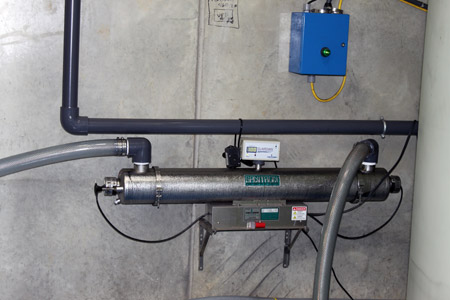
Water passes through a chamber housing a UV lamp, typically inside a quartz sleeve that lets the light through while keeping the lamp dry. As microorganisms pass, UV-C radiation penetrates their cell walls and reaches their genetic material.
At germicidal wavelengths, the light causes adjacent thymine bases in DNA to bond together, forming what are called pyrimidine dimers. Those distorted links prevent the organism from transcribing its genetic code and reproducing.
An organism that cannot replicate cannot cause infection. It’s biologically inert.
The whole interaction takes seconds. There’s no chemical reaction, no byproduct, and no change to the water’s taste, odor, pH, or mineral content.
What Wavelength Does UV Disinfection Use?
Conventional systems use low-pressure mercury vapor lamps emitting primarily at 254 nanometers, which sits close to the peak absorption wavelength of DNA. Newer UV-LED systems operate in the 265–280 nanometer range.
What Does UV Actually Inactivate?
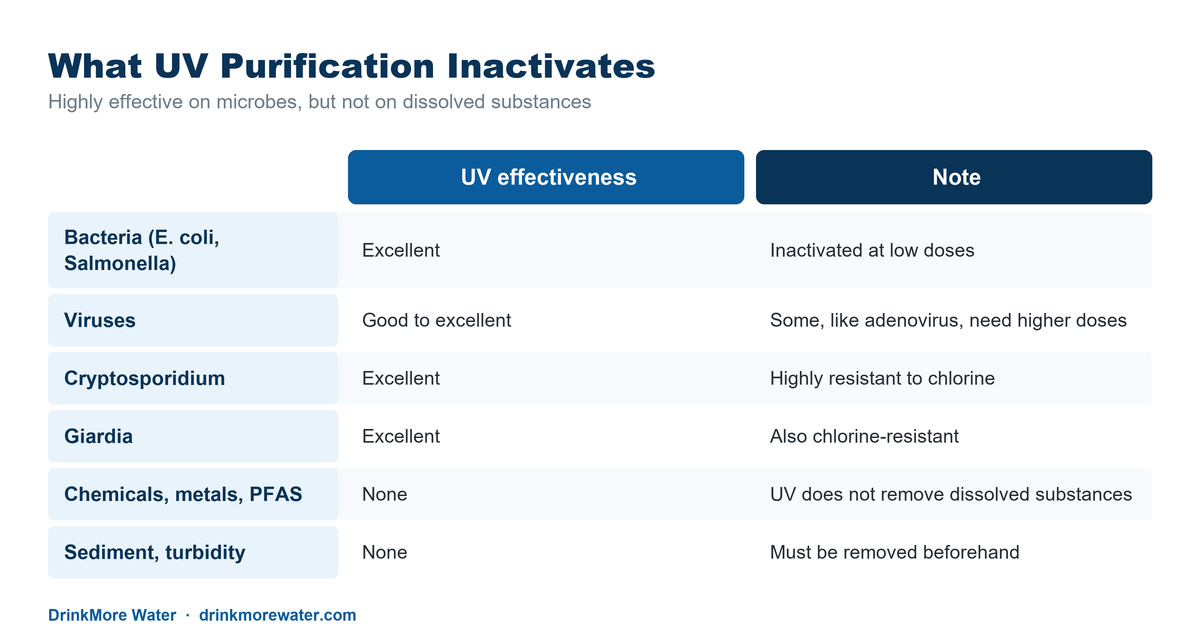
UV is effective across the microbiological spectrum, and it has one notable advantage over chlorine.
Cryptosporidium is the standout. This protozoan parasite is remarkably resistant to chlorination — it survives disinfectant concentrations that eliminate most pathogens — but it’s readily inactivated by UV at ordinary doses. That single fact drove much of the adoption of UV in municipal treatment.
What Is a UV Dose, and Why Does It Matter?
Dose is the whole ballgame in UV disinfection, and it’s where cheap systems cut corners.
UV dose measures how much germicidal energy an organism actually receives, expressed in millijoules per square centimeter (mJ/cm²). It’s a product of light intensity and exposure time — a weaker lamp with slower flow can deliver the same dose as a stronger lamp with faster flow.
Under NSF/ANSI Standard 55, residential UV systems are certified at two levels. Class A systems deliver at least 40 mJ/cm² and are intended for water that may be microbiologically unsafe. Class B systems deliver at least 16 mJ/cm² and are intended only as supplemental treatment for water that’s already potable.
The practical implication: a UV system’s rated flow rate is a limit, not a suggestion. Push more water through than the system is rated for and the dose drops below the germicidal threshold. The lamp still glows. The water still looks fine. The disinfection has stopped working.
What UV Water Purification Cannot Do
Three limitations, and all three matter.
UV removes nothing. It inactivates organisms but leaves them in the water, along with every dissolved chemical, metal, and mineral. Lead, arsenic, nitrate, PFAS, and chlorine all pass straight through unaffected. UV is a disinfection technology, not a purification technology in the broader sense — a distinction we unpack in water purification vs. filtration.
UV needs clear water. Turbidity is the enemy. Suspended particles scatter and absorb UV light, and organisms can physically shelter behind them. This is why UV always follows filtration, never precedes it. Cloudy water gets inadequate treatment even in a properly sized system.
UV leaves no residual. Chlorine persists in the water and continues protecting it through the distribution system. UV acts only inside the chamber. The moment water exits, it has no ongoing protection — so anything downstream of the lamp must be kept sanitary by other means.
That last point is the one system designers care most about, and it shapes how UV gets deployed.
UV vs. Chlorine: How Do They Compare?
Neither is strictly superior. Chlorine’s residual protection is genuinely valuable across miles of municipal distribution pipe. UV’s lack of byproducts and effectiveness against chlorine-resistant parasites is genuinely valuable in a controlled facility.
Many systems use both, which is why municipal water often arrives at your tap having been through UV and carrying a chlorine residual.
How We Use UV at Our Plant
Ultraviolet disinfection is one of two chemical-free technologies in our process, and its role is specifically shaped by what comes before it.
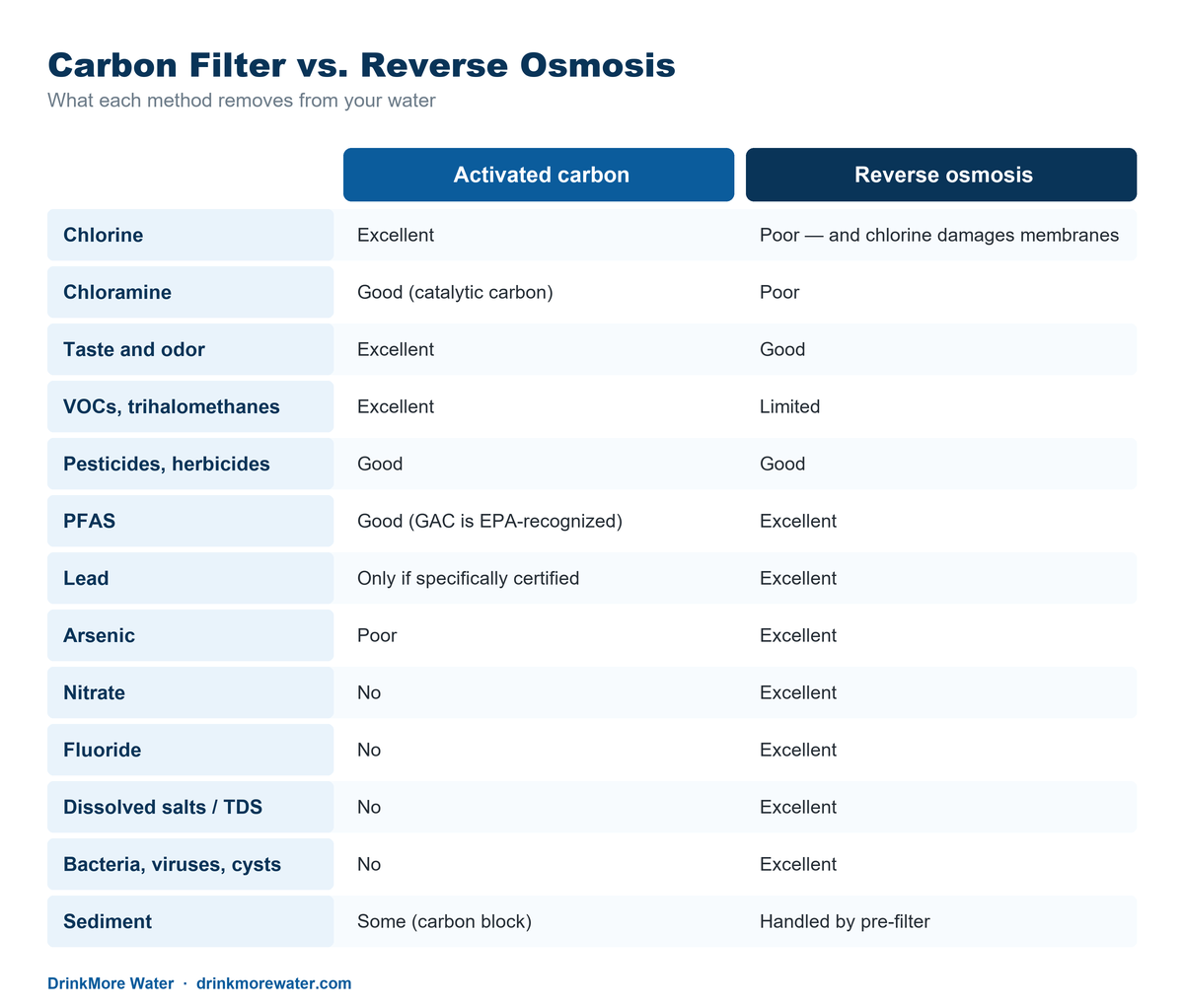
Our purification removes all chlorine — carbon strips it before the reverse osmosis stage, both for taste and because chlorine oxidizes and destroys RO membranes. That leaves finished water with no disinfectant residual protecting it.
So we disinfect twice, without chemicals.
Ultraviolet light comes first. Water passes through chambers housing UV lamps where germicidal wavelengths destroy the genetic material of any microorganism present. A final UV pass occurs before water reaches our stainless steel storage tanks — the point where recontamination risk would otherwise be highest.
Ozone is the second layer, introduced right at the reverse osmosis exit and used at several points throughout. Ozone oxidizes a broad range of contaminants and organisms, including Cryptosporidium, then decomposes back into ordinary oxygen, leaving no residue.
Running UV after reverse osmosis is deliberate. RO produces water with essentially no turbidity, which is exactly the condition UV needs to work at full effectiveness. The sequence isn’t arbitrary — each stage sets up the next.
The complete process is documented on our water purification process page, and you can see the equipment on our bottling plant page. For the membrane stage, see how does reverse osmosis work.
Do You Need UV at Home?
For most households on municipal water, no. Your utility already disinfects, and water arrives carrying a chlorine residual that protects it through the distribution system.
UV is genuinely valuable in specific situations: private well water, which receives no municipal treatment at all; during and after boil-water advisories; and in systems where chlorine has been removed and something has to take its place.
If you’re on a well, UV is worth serious consideration — but pair it with adequate filtration first, since turbidity undermines it, and test your water to find out what you’re actually dealing with. Our guide to what’s in tap water covers the broader contaminant picture.
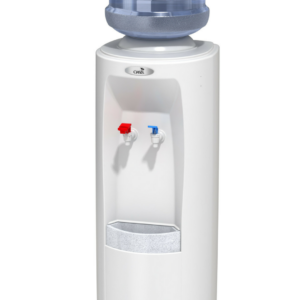
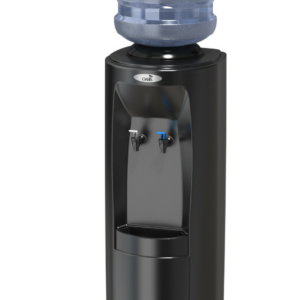
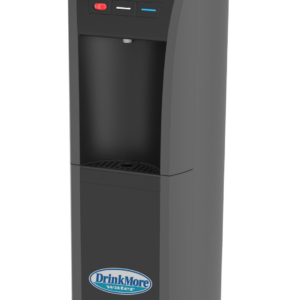
If you’d rather not run disinfection equipment yourself, our home water delivery service brings purified water — reverse osmosis, UV, and ozone treated — to households across DC, Maryland, and Northern Virginia. Our bottleless water coolers purify at the point of use. Both are at DrinkMore Water. For offices and events, DrinkMore Custom Water bottles the same water under custom labels.
Our complete Eurofins lab results are published on our water analysis page.
The Bottom Line on UV Water Purification
UV water purification inactivates bacteria, viruses, and chlorine-resistant parasites like Cryptosporidium using germicidal light at around 254 nanometers, without adding chemicals or creating byproducts. It’s fast, it doesn’t change taste, and it works within seconds.
What it doesn’t do is remove anything. Chemicals, metals, and dissolved solids pass through untouched, cloudy water blocks it, and it provides no protection once water leaves the chamber. UV belongs inside a multi-stage process, positioned after filtration — never standing alone.
Frequently Asked Questions
Does UV light actually kill bacteria in water?
UV inactivates rather than kills in the conventional sense. Germicidal light at around 254 nanometers damages the DNA and RNA inside microorganisms, forming bonds that prevent replication. An organism that cannot reproduce cannot cause infection. Bacteria, viruses, and protozoan cysts are all inactivated, typically within seconds.
Does UV purification remove chemicals or metals?
No. UV disinfection has no effect on dissolved substances. Lead, arsenic, nitrate, PFAS, fluoride, chlorine, and dissolved minerals pass through completely unaffected. UV addresses microbiological contamination only. Removing chemical contaminants requires reverse osmosis, activated carbon, or ion exchange.
How long does a UV lamp last?
Most UV lamps are rated for roughly 9,000 hours, about one year of continuous operation. Critically, output declines gradually well before the lamp stops glowing — so a lamp that still lights may be delivering an inadequate germicidal dose. Replace on schedule rather than waiting for visible failure.
Is UV better than chlorine for treating water?
They serve different purposes. UV adds no chemicals, creates no byproducts, doesn’t affect taste, and is highly effective against chlorine-resistant parasites like Cryptosporidium. Chlorine provides lasting residual protection through distribution pipes, which UV cannot. Many treatment systems use both.
Does UV work on cloudy water?
Not well. Suspended particles scatter and absorb UV light, and microorganisms can physically shelter behind them, escaping the germicidal dose entirely. UV must always follow filtration. Treating turbid water with UV produces unreliable disinfection even when the system is correctly sized and the lamp is new.
Does UV change the taste of water?
No. Ultraviolet disinfection involves no chemical reaction and produces no byproducts, so it leaves taste, odor, pH, and mineral content completely unchanged. This is one of its main advantages over chlorination, which produces a detectable taste and forms disinfection byproducts like trihalomethanes.
What to Expect
Discover the Difference

30 years Experience

Fast Turnaround Time

Excellent Customer Service

State-Of-The-Art Purification

Made in the USA

Delivered to you!
Testimonials

“10 out of 10. Delivery guy is the best!”
“Excellent water, excellent service all around! Have been using them for years.”
“Very reliable company. Delivers as promised.”
“Everyone here is always nice and accommodating. Never waited and I get unloaded quickly.”
Request Form
We would love to hear from you! Please fill out this form and we will get in touch with you shortly.