Water Purification vs. Filtration: The Difference That Matters
Water Purification vs. Filtration: What’s the Difference?
Water filtration physically separates suspended particles from water — sediment, rust, and anything large enough to be strained or adsorbed. Water purification removes dissolved contaminants and microorganisms, using methods like reverse osmosis, distillation, deionization, UV, or ozone. All purification involves filtration; most filtration is not purification.
The words get used interchangeably on product labels. They mean genuinely different things, and the gap between them is where a lot of consumer confusion lives.
Why Does the Distinction Matter?
Because “filtered water” is a marketing phrase with no fixed technical meaning, and “purified water” is a legal designation with a specific numeric threshold.
To be labeled purified water in the United States, water must meet the U.S. Pharmacopeia standard of no more than 10 parts per million total dissolved solids, produced by distillation, deionization, reverse osmosis, or a comparable process. That’s an enforceable definition.
Filtered water has no equivalent standard. A pitcher that removes chlorine taste qualifies. So does a refrigerator cartridge. So does a whole-house sediment filter that removes nothing but grit.
When a product says “filtered,” you’ve learned that water passed through something. You have not learned what came out.
What Does Filtration Actually Do?
Filtration works by physical separation — straining, or adsorption onto a surface.
Sediment filtration strains particles by size. A 5-micron filter blocks anything larger than 5 microns: rust flakes, silt, sand, scale. It has no effect on anything dissolved, because dissolved substances aren’t particles.
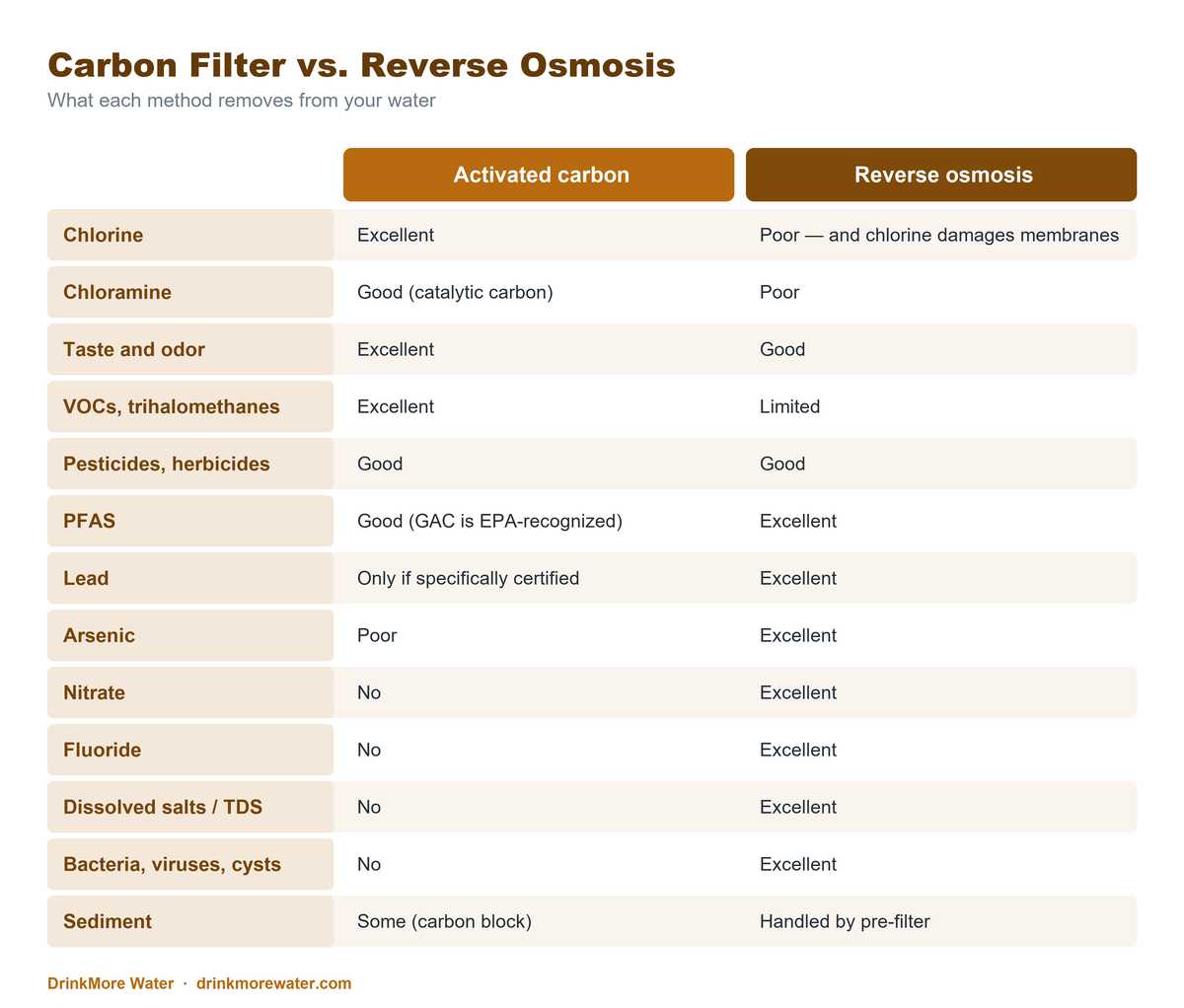
Activated carbon filtration works by adsorption rather than straining. Contaminants stick to carbon’s enormous internal surface area — 500 to 1,500 square meters per gram. Carbon is excellent at chlorine, chloramine, volatile organic compounds, trihalomethanes, and the taste and odor compounds that survive municipal treatment.
Carbon’s limitation is structural: adsorption capacity is finite. Once saturated, the filter stops working, with no visible change. We compare it directly with membrane treatment in reverse osmosis vs. carbon filter.
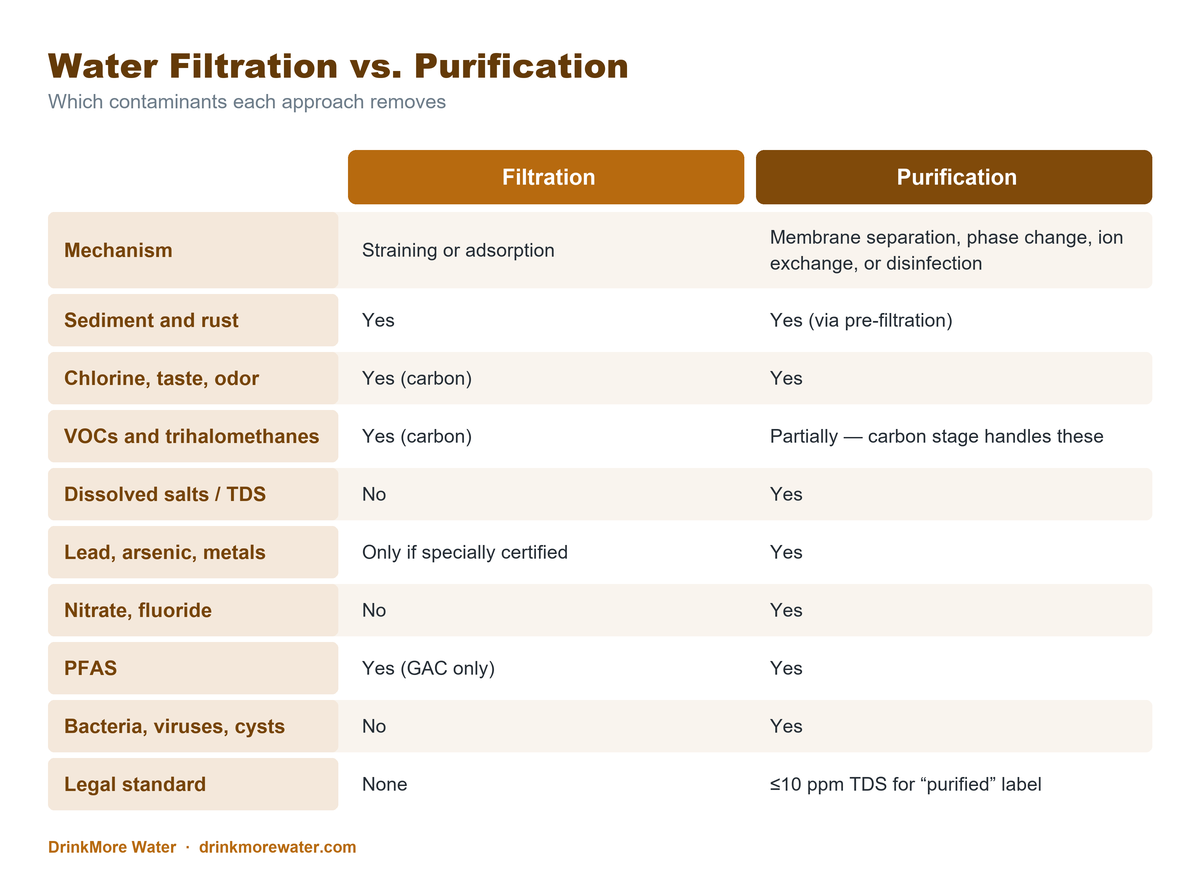
What filtration cannot do — by either mechanism — is remove dissolved salts, most metals, nitrate, fluoride, or pathogens.
What Does Purification Add?
Purification technologies target what filtration leaves behind: substances dissolved at the molecular level, and living organisms.
Reverse osmosis forces water through a semi-permeable membrane with pores around 0.0001 microns, rejecting 95–99% of total dissolved solids by size and electrical charge. See what is reverse osmosis for the full explanation.
Distillation boils water and condenses the steam, leaving dissolved solids behind in the boiling vessel.
Deionization uses ion exchange resins to strip charged particles from water.
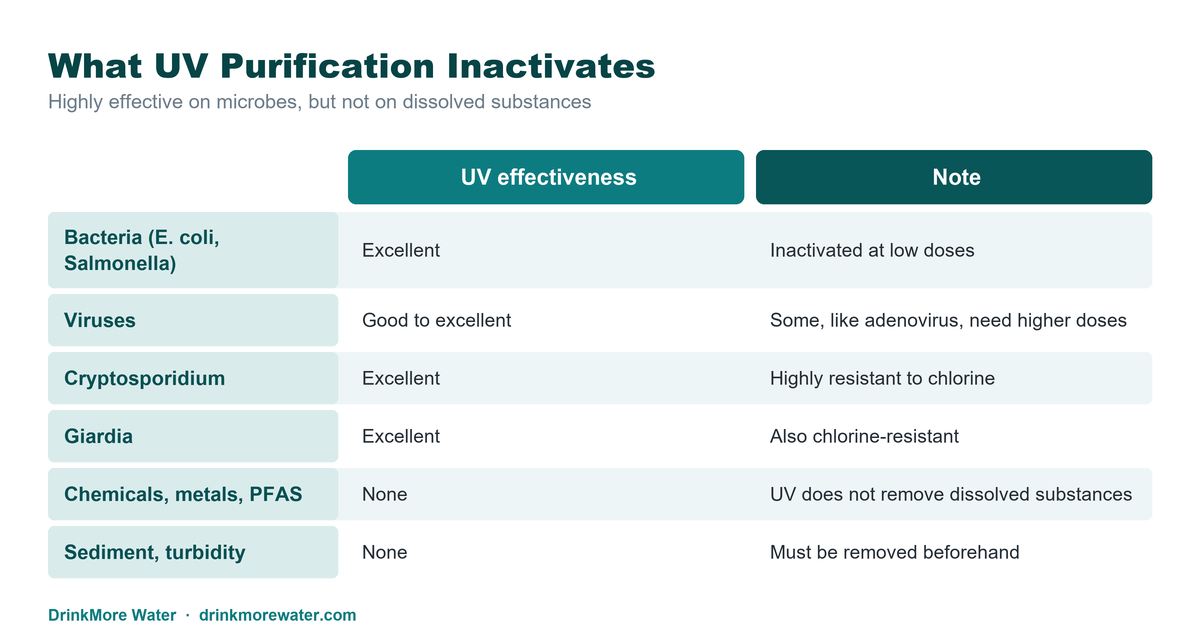
Ultraviolet disinfection destroys the genetic material of microorganisms so they cannot replicate. Covered in UV water purification.
Ozonation oxidizes contaminants and organisms, then decomposes back into ordinary oxygen.
Filtration vs. Purification: Side by Side
The row worth staring at is dissolved salts. That single capability is the dividing line between the two categories, and it’s the one that carries most of the others with it.
Is Filtered Water the Same as Purified Water?
No, and the difference is measurable rather than semantic.
Run tap water at 200 ppm total dissolved solids through a quality carbon pitcher and it comes out at roughly 200 ppm. It will taste dramatically better — the chlorine is gone — but nearly everything dissolved is still there.
Run the same water through reverse osmosis and it comes out under 10 ppm.
Both processes improved the water. Only one qualifies as purification.
This is worth knowing because a lot of countertop and refrigerator products are marketed with language that implies purification while delivering filtration. Neither is dishonest, exactly, but the vocabulary invites a conclusion the product doesn’t support.
We compare finished products directly in purified water vs. tap water.
Does Purified Water Need Filtration Too?
Yes — and this is the part that surprises people. Purification systems depend on filtration to function.
At our Gaithersburg, Maryland plant, incoming municipal water passes through pre-filtration before anything else, capturing sediment and particulates that would foul the membranes downstream. Then activated carbon, which is not optional: chlorine oxidizes and permanently destroys polyamide reverse osmosis membranes, so it has to be removed first.
Only then does water reach the membranes — roughly twenty layers of them, rather than the single element in a residential unit. If purity drifts from specification even slightly, an alarm triggers and the entire system shuts down automatically.
After the membranes, disinfection. Because the process has removed all chlorine, there’s no residual left to protect the water, so we use two chemical-free technologies instead: ultraviolet light, including a final pass before water reaches our stainless steel storage tanks, and ozone, introduced at the reverse osmosis exit and used at several points throughout.
Finished water is bottled at approximately 1.2 ppm total dissolved solids.
So the honest framing isn’t purification versus filtration. It’s filtration as the necessary first act of purification. Each stage exists to make the next one possible.
The full walkthrough is on our water purification process page, and the equipment is shown on our bottling plant page.
Which Do You Actually Need?
Start with the problem you’re solving.
Filtration is enough if your concern is chlorine taste and odor, your utility’s Consumer Confidence Report shows clean results, and your plumbing is post-1986. A carbon pitcher or faucet filter solves the problem most households actually have, cheaply.
Purification makes sense if you’re dealing with lead risk from older plumbing, documented PFAS or nitrate in your area, well water with no municipal treatment, or you simply want the broadest contaminant removal available.
Either way, two habits are worth adopting. Read your utility’s annual report before deciding anything — your own numbers beat headlines. And maintain whatever you install, because an expired cartridge performs worse than no filter at all, silently.
Purified Water Without the Equipment
If you’d rather not own, monitor, and maintain a purification system, delivery moves all of that onto the bottler — including the independent lab testing that tells you whether it’s working.
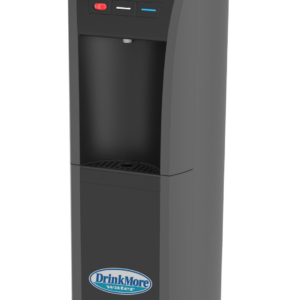
Our home water delivery service brings reverse-osmosis purified water to households across DC, Maryland, and Northern Virginia. If you’d rather skip bottles entirely, our bottleless water coolers connect directly to your existing water line and purify on site — a good fit for offices and higher-volume households.
Both options are at DrinkMore Water. For offices, events, weddings, and conferences, DrinkMore Custom Water bottles the same purified water under your own label.
Our complete Eurofins independent lab report — the full report, not a summary — is published on our water analysis page. Read that before deciding on us or anyone else.
The Bottom Line: Purification vs. Filtration
Water purification vs. filtration comes down to one capability: removing dissolved contaminants. Filtration strains particles and adsorbs chemicals like chlorine, which improves taste substantially but leaves dissolved salts, metals, nitrate, and pathogens in place. Purification removes those, and “purified” is a legal designation requiring 10 ppm total dissolved solids or less.
They’re not alternatives. Filtration is the first stage of purification — and on its own, it’s a partial solution marketed with complete-sounding language.
Frequently Asked Questions
Is filtered water the same as purified water?
No. “Purified water” is a legal designation requiring no more than 10 parts per million total dissolved solids, achieved through reverse osmosis, distillation, or deionization. “Filtered water” has no legal standard — it means water passed through something. Carbon filtration removes chlorine and improves taste but leaves dissolved solids largely intact.
Does a water filter remove bacteria?
Standard sediment and carbon filters do not remove bacteria, viruses, or cysts. Some specialized filters with pore sizes below 1 micron are certified for cyst reduction. Reliable microbiological control requires purification methods: reverse osmosis, ultraviolet disinfection, ozonation, or distillation.
Which removes more contaminants, filtration or purification?
Purification, by a wide margin. Filtration handles sediment, chlorine, taste, odor, and volatile organic compounds. Purification adds removal of dissolved salts, heavy metals like lead and arsenic, nitrate, fluoride, and microorganisms. Reverse osmosis removes 95–99% of total dissolved solids; carbon filtration removes almost none.
Do purification systems still need filters?
Yes. Filtration is a required first stage. Sediment pre-filters protect membranes from particulate fouling, and activated carbon removes chlorine, which oxidizes and permanently destroys reverse osmosis membranes. Skipping either stage shortens membrane life dramatically and degrades performance.
Is a refrigerator filter enough?
For chlorine taste and odor, generally yes — that’s what most are designed and certified for. They do not remove dissolved solids, nitrate, fluoride, or bacteria, and most do not remove lead unless specifically certified. Check the certification for the contaminants you actually care about rather than assuming coverage.
What does TDS tell me about my water?
Total dissolved solids measures everything dissolved in water — minerals, salts, and metals — in parts per million. It’s a useful indicator of whether purification occurred, since purified water measures under 10 ppm. But TDS is an aggregate figure and identifies no specific contaminant. Only lab testing can do that.
What to Expect
Discover the Difference

30 years Experience

Fast Turnaround Time

Excellent Customer Service

State-Of-The-Art Purification

Made in the USA

Delivered to you!
Testimonials

“10 out of 10. Delivery guy is the best!”
“Excellent water, excellent service all around! Have been using them for years.”
“Very reliable company. Delivers as promised.”
“Everyone here is always nice and accommodating. Never waited and I get unloaded quickly.”
Request Form
We would love to hear from you! Please fill out this form and we will get in touch with you shortly.