DrinkMore Water 2026 Water Quality Report
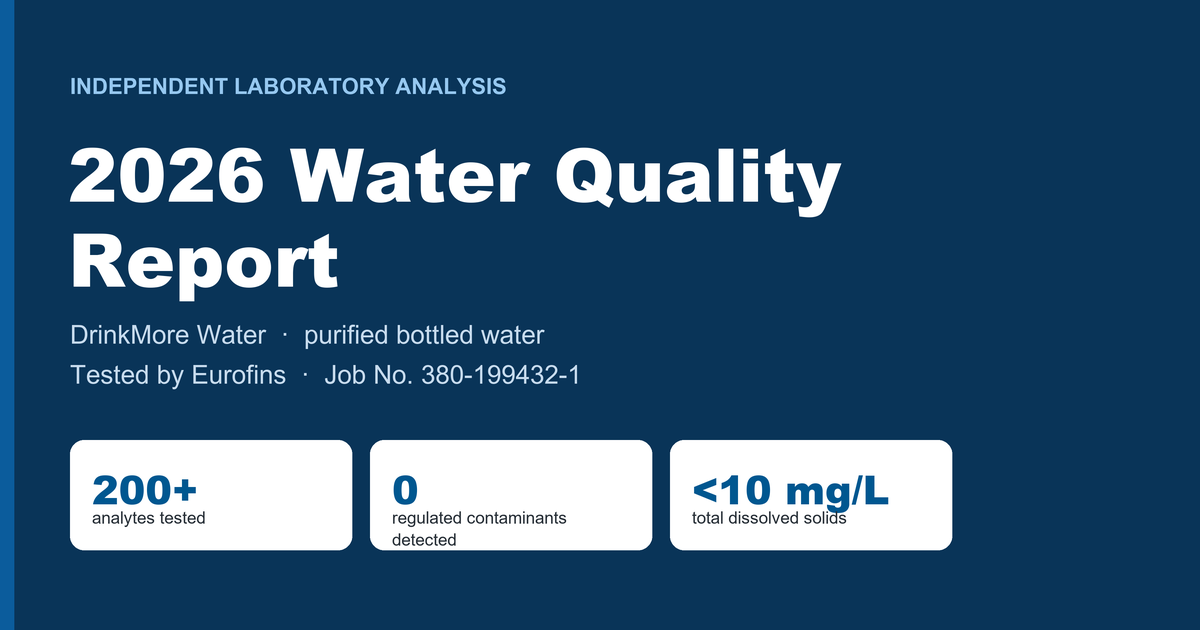
This water quality report presents the complete results of independent laboratory testing performed on DrinkMore Water purified bottled water by Eurofins, an accredited third-party laboratory. It includes every analyte tested, the result for each, and the laboratory’s reporting limit — the concentration below which the lab cannot confirm a substance is absent.
We publish the full report rather than a summary. Sample collection date: February 16, 2026. Laboratory: Eurofins Pomona, a laboratory within Eurofins Drinking Water and Wastewater West, LLC, accredited to TNI 2016 Standards and ISO/IEC 17025:2017 (Job No. 380-199432-1; report issued March 16, 2026).
Why We Publish the Complete Report
Most bottled water companies publish a one-page summary stating that their water meets all applicable standards. That statement is usually true and almost never useful.
A summary tells you a bottler passed. It doesn’t tell you what was tested, what was found, or how sensitive the testing was.
We publish the underlying data for three reasons:
- A “non-detect” result is meaningless without a reporting limit. Non-detect at 20 parts per trillion and non-detect at 2 parts per trillion are very different statements about the same contaminant. Only the full report shows which one you’re getting.
- The list of analytes matters as much as the results. A clean report on twelve analytes says less than a clean report on two hundred. You should be able to see what wasn’t tested.
- Verifiable claims are worth more than confident ones. Anyone can say their water is pure.
If you’re comparing bottled water brands, ask each one for this document. The response itself is informative.
How to Read This Report
Four terms make the data readable.
Analyte — the specific substance tested for.
Result — the measured concentration. “ND” means non-detect: the substance was not found at or above the reporting limit.
Reporting limit (RL) — the lowest concentration the laboratory can reliably quantify with this method. This is the number that gives “non-detect” its meaning. A non-detect result means the analyte is below this figure, not that it is absolutely absent.
MCL — Maximum Contaminant Level, the enforceable federal limit for that substance in drinking water, set by the EPA for public water systems. Bottled water is regulated by the FDA, whose standards of quality generally align with EPA MCLs.
Units vary by analyte: mg/L (milligrams per liter, equivalent to parts per million), µg/L (micrograms per liter, parts per billion), and ng/L (nanograms per liter, parts per trillion).
Summary of Results
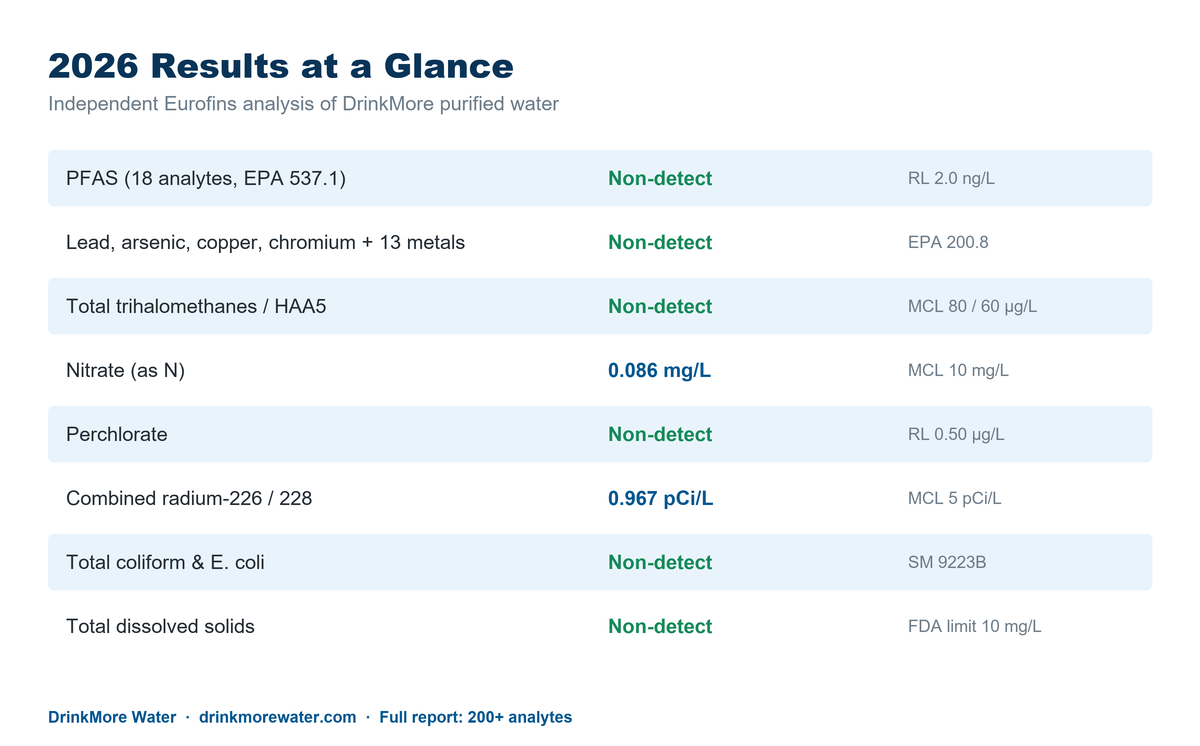
This report covers more than 200 individual analytes across more than two dozen EPA and Standard Methods analytical procedures — PFAS, metals, inorganic anions, volatile and semivolatile organic compounds, radiologicals, and microbiology. Every regulated contaminant returned non-detect. The only measurable results were trace levels of naturally occurring or dissolved substances, each well below its federal limit: sodium at 1.5 mg/L, chloride at 0.96 mg/L, nitrate at 0.086 mg/L (federal MCL 10 mg/L), and combined radium-226/228 at 0.967 pCi/L (federal MCL 5 pCi/L). Finished-water total dissolved solids were non-detect below the laboratory’s 10 mg/L reporting limit — within the FDA standard for purified water. Total coliform and E. coli were both non-detect.
Finished water total dissolved solids: non-detect (below the laboratory’s 10 mg/L reporting limit). The FDA requires purified water to contain no more than 10 mg/L total dissolved solids.
Test Results by Category
Per- and Polyfluoroalkyl Substances (PFAS)
| Analyte | Result | Reporting limit | Federal MCL |
|---|---|---|---|
| PFOA | Non-detect | 2.0 ng/L | 4.0 ng/L |
| PFOS | Non-detect | 2.0 ng/L | 4.0 ng/L |
| PFHxS | Non-detect | 2.0 ng/L | 10 ng/L* |
| PFNA | Non-detect | 2.0 ng/L | 10 ng/L* |
| HFPO-DA (GenX) | Non-detect | 2.0 ng/L | 10 ng/L* |
| 13 additional PFAS analytes (PFBS, PFHpA, PFHxA, PFDA, PFDoA, PFUnA, PFTrDA, PFTA, ADONA, 11Cl-PF3OUdS, 9Cl-PF3ONS, NEtFOSAA, NMeFOSAA) | Non-detect | 2.0 ng/L | Not individually regulated |
*The EPA finalized MCLs for six PFAS in April 2024. In May 2026 the agency proposed upholding the PFOA and PFOS limits while rescinding those for PFHxS, PFNA, HFPO-DA, and the Hazard Index mixture standard. Those rescission proposals were not final as of publication.
Background on these compounds: PFAS in drinking water.
Metals
| Analyte | Result | Reporting limit | Federal MCL |
|---|---|---|---|
| Lead | Non-detect | 0.50 µg/L | 15 µg/L (action level) |
| Arsenic | Non-detect | 1.0 µg/L | 10 µg/L |
| Copper | Non-detect | 1.0 µg/L | 1.3 mg/L (action level) |
| Chromium (total) | Non-detect | 0.90 µg/L | 100 µg/L |
| 13 additional metals (aluminum, antimony, barium, beryllium, cadmium, manganese, mercury, nickel, selenium, silver, thallium, uranium, zinc) | Non-detect | method reporting limits | — |
Inorganic Compounds
| Analyte | Result | Reporting limit | Federal MCL |
|---|---|---|---|
| Nitrate (as N) | 0.086 mg/L | 0.050 mg/L | 10 mg/L |
| Fluoride | Non-detect | 0.050 mg/L | 4.0 mg/L |
| Perchlorate | Non-detect | 0.50 µg/L | No federal MCL (some states set 2–6 µg/L) |
Related reading: fluoride in drinking water and perchlorates in water.
Volatile and Synthetic Organic Compounds
| Analyte | Result | Reporting limit | Federal MCL |
|---|---|---|---|
| Total trihalomethanes | Non-detect | 0.50 µg/L | 80 µg/L |
| Haloacetic acids (HAA5) | Non-detect | 2.0 µg/L | 60 µg/L |
| 70+ additional volatile and synthetic organic compounds (EPA 524.2, 525.2, 505, 515.4, 504.1) | Non-detect | method reporting limits | various |
Microbiological
| Analyte | Result | Method |
|---|---|---|
| Total coliform | Non-detect (<1 MPN/100 mL) | SM 9223B (Colilert) |
| E. coli | Non-detect (<1 MPN/100 mL) | SM 9223B (Colilert) |
| Heterotrophic plate count | Not included in this year’s panel | — |
Pharmaceuticals and Emerging Contaminants
This year’s annual analysis did not include a dedicated pharmaceuticals or hormones screen. The 2026 panel covers PFAS, metals, inorganic anions, volatile and semivolatile organic compounds, herbicides and pesticides, radiologicals, and microbiology. We state the omission rather than leave it unsaid: a pharmaceutical-residue screen was not part of this year’s testing scope.
Related reading: pharmaceuticals in drinking water.
How This Water Is Produced
The results above reflect water produced by the multi-stage purification process at our Gaithersburg, Maryland plant.
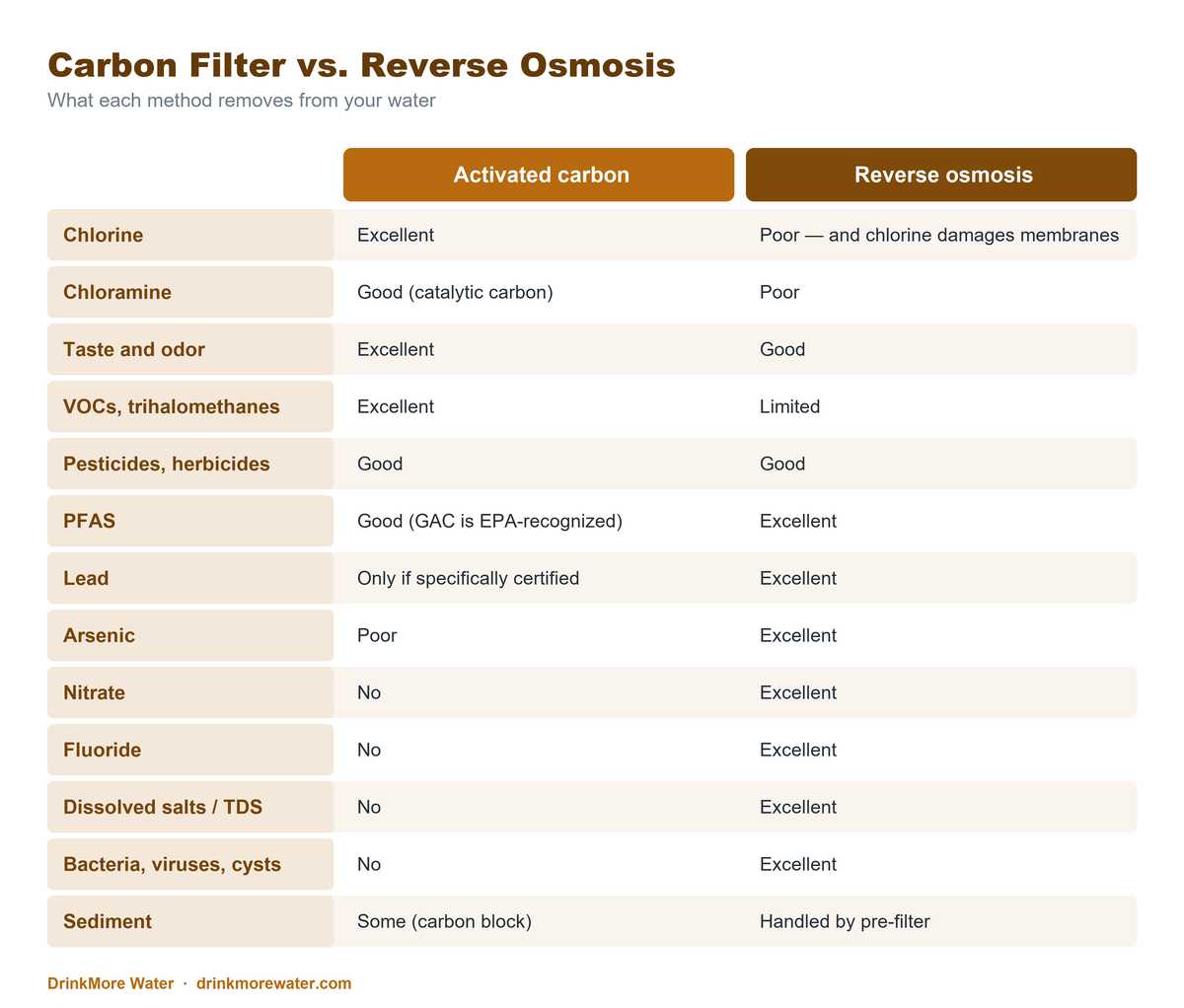
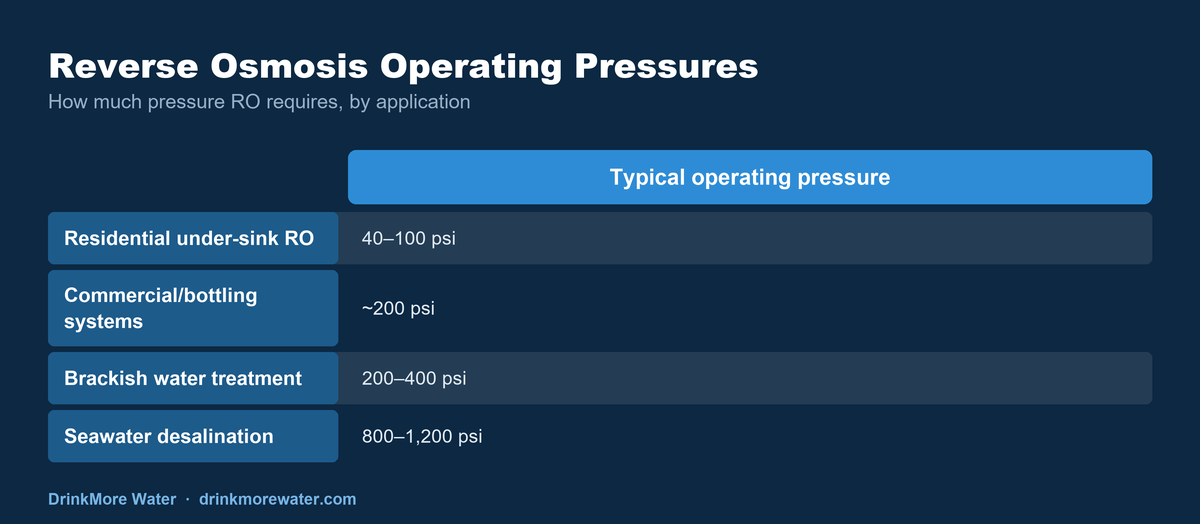
Incoming municipal water passes through pre-filtration and activated carbon, which removes chlorine — both for taste and because chlorine oxidizes and permanently destroys reverse osmosis membranes. Every drop then passes through roughly twenty layers of reverse osmosis membranes. If purity varies from specification even slightly, an alarm triggers and the entire system shuts down automatically.
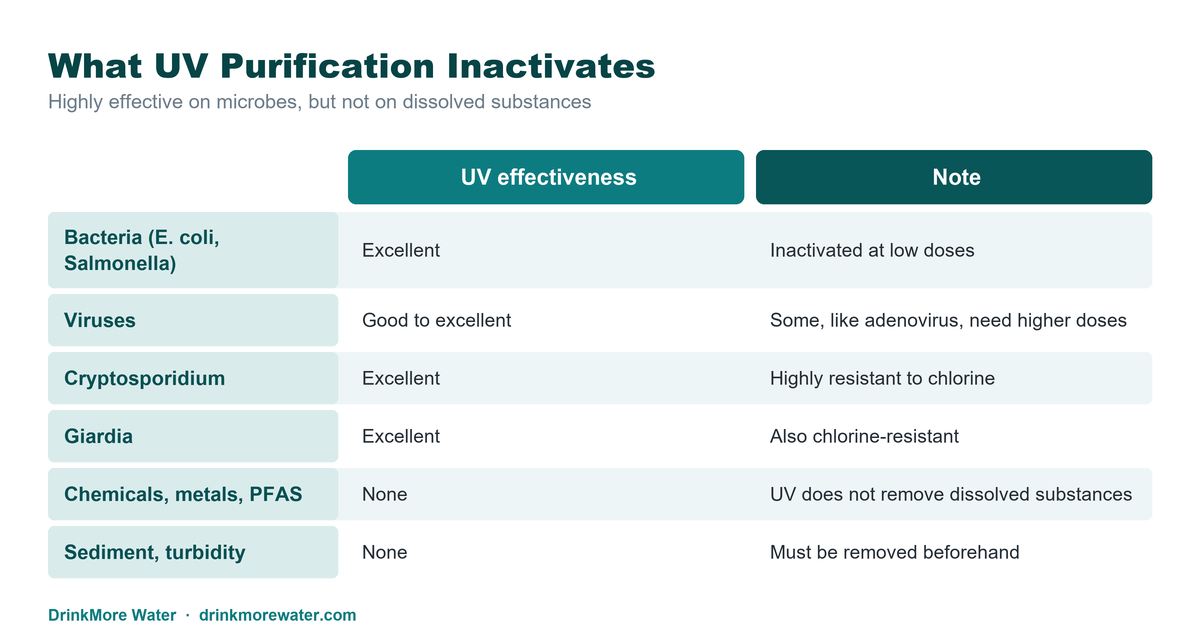
Because the process removes all chlorine, no disinfectant residual remains to protect the finished water. We use two chemical-free technologies instead. Ultraviolet light destroys the genetic material of any microorganism present, with a final UV pass before water reaches our stainless steel storage tanks. Ozone, introduced at the reverse osmosis exit and used at several points, oxidizes a broad range of contaminants — including organisms like Cryptosporidium that resist chlorination — then decomposes back into ordinary oxygen.
Full detail: our water purification process and our bottling plant.
Independent Recognition
In February 2025, DrinkMore Water received the gold medal for Best Purified Drinking Water at the 35th Berkeley Springs International Water Tasting — the longest-running water competition in the world. Ten trained media judges evaluated more than 80 entries from four continents blind, scoring appearance, aroma, taste, mouthfeel, and aftertaste. It was our first year entering.
Taste awards and lab results measure different things. This report is the one that addresses purity. More on the competition: our awards.
Testing Methodology
Laboratory: Eurofins Pomona, 941 Corporate Center Drive, Pomona, CA 91768 — a laboratory within Eurofins Drinking Water and Wastewater West, LLC, accredited to TNI 2016 Standards and ISO/IEC 17025:2017. Sample collection date: February 16, 2026 (a second sample, for PFAS and radon, was collected March 3, 2026). Sample type: finished bottled product. Analytical methods: EPA 537.1 (PFAS); EPA 200.7 and 200.8 (metals); EPA 300.0 (inorganic anions); EPA 331.0 (perchlorate); EPA 524.2 (volatile organics and trihalomethanes); EPA 525.2 (semivolatile organics); EPA 505, 515.4, and 504.1 (pesticides, herbicides, and PCBs); EPA 6251B (haloacetic acids); EPA 900.0, 903.0, and 904.0 (radiologicals); and SM 9223B (coliform and E. coli), among others. Report date: March 16, 2026. Job number: 380-199432-1.
Download the complete report (PDF): 2026 Eurofins analytical report (PDF).
Questions About These Results
If you’d like clarification on any analyte, method, or reporting limit, contact us — we’d rather answer a specific question than have you rely on a summary.
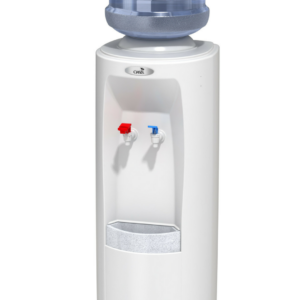
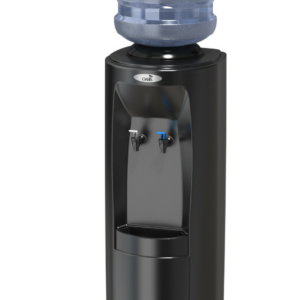
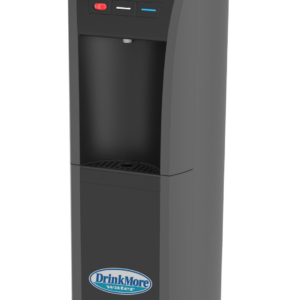
Ongoing testing data is maintained on our water analysis page. If you’d like this water delivered, our home water delivery service covers households across DC, Maryland, and Northern Virginia, and our bottleless water coolers purify at the point of use. Both are at DrinkMore Water. For offices, events, and custom-labeled bottles, see DrinkMore Custom Water.
Frequently Asked Questions
Who tests DrinkMore Water?
Eurofins, an independent accredited third-party laboratory, performs the testing. We do not rely on internal testing for these published results. The complete report — every analyte, result, and reporting limit — is published on this page rather than summarized, so the underlying data can be reviewed directly.
What does “non-detect” mean on a water quality report?
Non-detect means the laboratory did not find the substance at or above its reporting limit — the lowest concentration the method can reliably quantify. It does not mean absolute absence. This is why reporting limits are published alongside every result: non-detect at 20 ng/L and at 2 ng/L are very different findings.
How often is this water quality report updated?
DrinkMore commissions this comprehensive independent analysis annually, and tests its water throughout each production day with additional daily samples sent to an independent laboratory. Results from prior testing periods are maintained on our water analysis page so changes over time can be compared.
Is bottled water tested more or less than tap water?
They’re regulated differently. Public water systems are regulated by the EPA and test on frequencies set by the Safe Drinking Water Act. Bottled water is regulated by the FDA, whose quality standards generally align with EPA limits. The meaningful difference between bottlers is whether complete results are published or merely summarized.
What is TDS and why does it matter?
Total dissolved solids measures everything dissolved in water — minerals, salts, and metals — in milligrams per liter. The FDA requires purified water to measure no more than 10 mg/L. TDS is an aggregate figure that confirms purification occurred, but it identifies no individual contaminant; that requires analyte-specific testing.
Can I get a copy of the full lab report?
Yes. The complete report is downloadable from this page as a PDF, including all analytes, results, reporting limits, and analytical methods. If you have questions about a specific analyte or method, contact us directly.
What to Expect
Discover the Difference

30 years Experience

Fast Turnaround Time

Excellent Customer Service

State-Of-The-Art Purification

Made in the USA

Delivered to you!
Testimonials

“10 out of 10. Delivery guy is the best!”
“Excellent water, excellent service all around! Have been using them for years.”
“Very reliable company. Delivers as promised.”
“Everyone here is always nice and accommodating. Never waited and I get unloaded quickly.”
Request Form
We would love to hear from you! Please fill out this form and we will get in touch with you shortly.