Best Bottled Water Brands: How to Compare Them on Purity, Not Packaging
How Do the Best Bottled Water Brands Actually Compare?
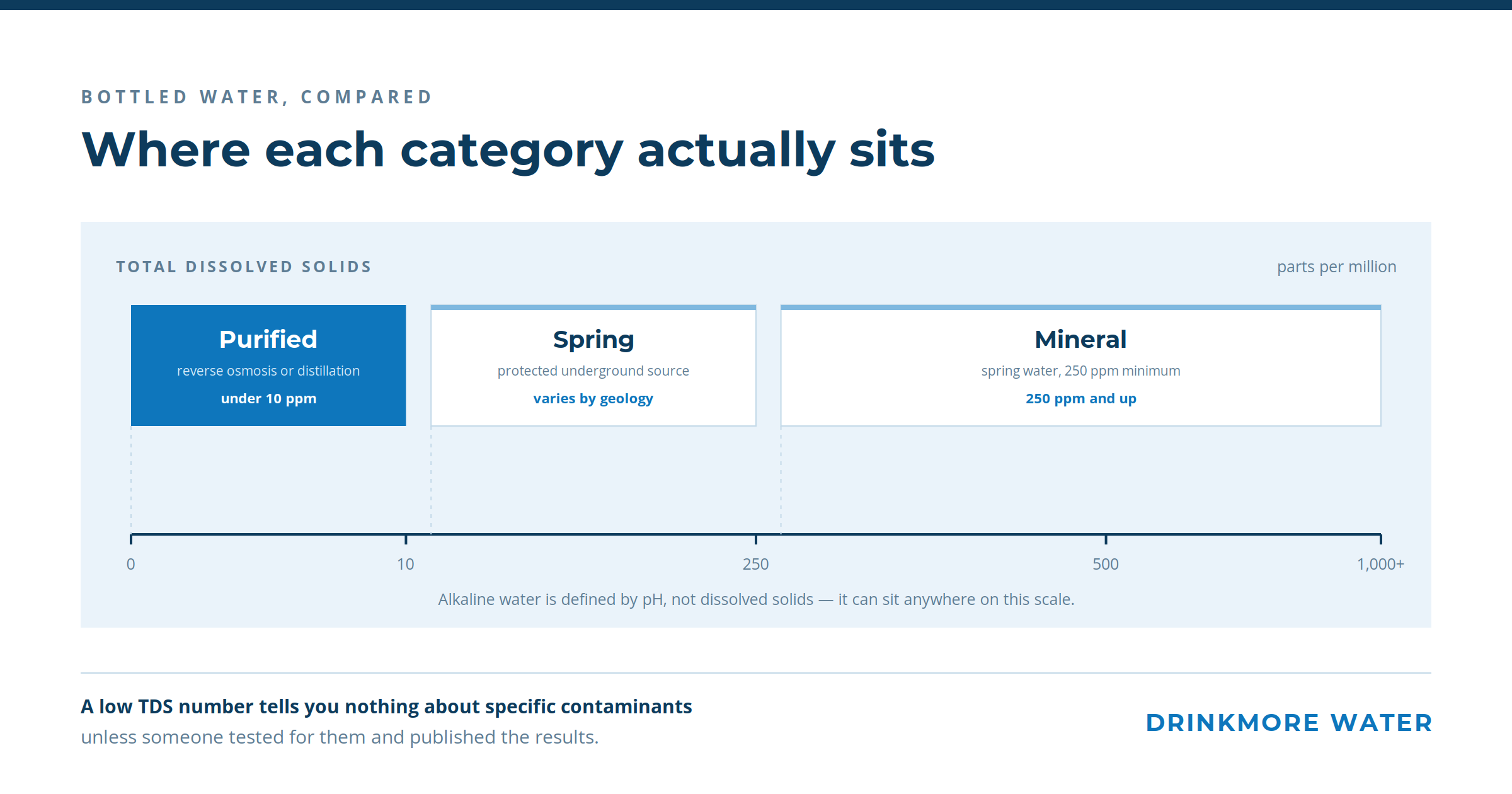
The best bottled water brands fall into four categories that differ far more than their labels suggest: purified water (treated by reverse osmosis or distillation), spring water (bottled from a protected underground source), mineral water (spring water with at least 250 ppm dissolved minerals), and alkaline water (elevated pH, usually by ionization). Purity, taste, and price vary by category, not by marketing.
Most “best bottled water” lists rank brands by bottle design and shelf presence. This one explains what’s actually in the bottle, how to verify it, and which questions separate a brand worth paying for from a brand with a good design agency.
Full disclosure before we start: we bottle purified water in Gaithersburg, Maryland. We’ll show our work and cite third-party sources so you can judge the claims rather than trust them.
What Are the Main Types of Bottled Water?
The FDA defines bottled water categories by source and treatment. These definitions are legal standards, not marketing language, and they’re the fastest way to understand what you’re buying.
Purified water has been treated to remove dissolved solids and contaminants, typically by reverse osmosis, distillation, or deionization. To be labeled “purified,” it must meet the U.S. Pharmacopeia standard of no more than 10 parts per million total dissolved solids. The source is usually municipal water — which sounds unglamorous until you realize the source barely matters once you’ve removed 99% of what was dissolved in it.
Spring water comes from an underground formation flowing naturally to the surface. It must be collected at the spring or through a borehole tapping the same formation. It carries whatever minerals that geology contributed, and it receives minimal treatment — usually filtration and disinfection.
Mineral water is spring water containing at least 250 ppm total dissolved solids from the source. No minerals may be added. European brands dominate this category.
Artesian water comes from a confined aquifer under pressure, sitting beneath a layer of rock or clay.
Alkaline water has a pH above roughly 8, achieved either naturally or, more often, through electrolysis. We cover the evidence in detail in our guide to alkaline water.
For the complete breakdown, see our pillar guide to the types of water.
Bottled Water Brand Comparison by Category
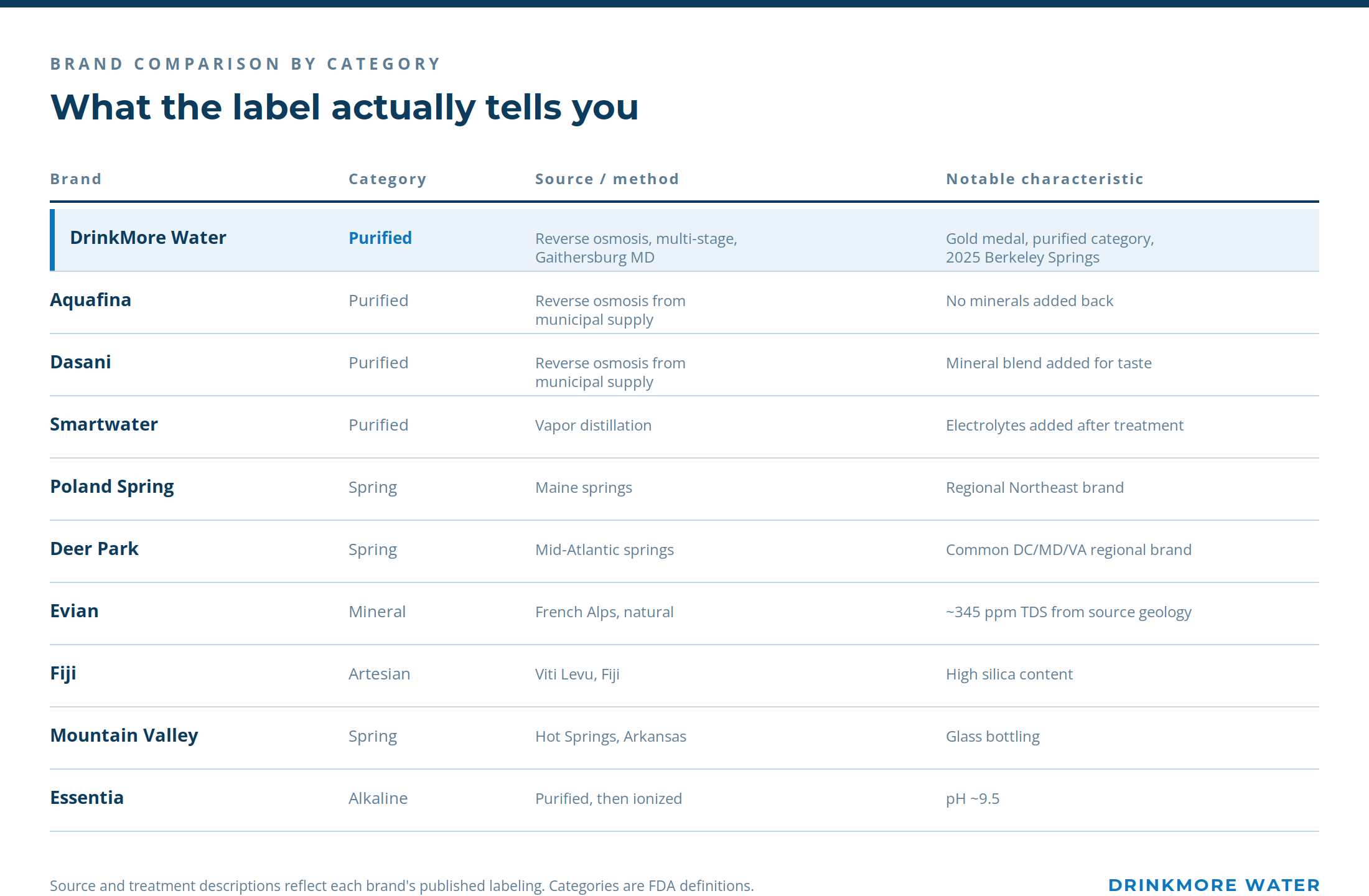
Source and treatment descriptions reflect each brand’s published labeling. Categories are FDA definitions.
Which Bottled Water Is the Cleanest?
“Cleanest” has a measurable definition: total dissolved solids, plus verified absence of specific contaminants. Both are testable. Neither is guesswork.
Total dissolved solids (TDS) measures everything dissolved in the water — minerals, salts, metals, and whatever else the source contributed. Purified water sits at the low end by definition. Mineral water sits deliberately high, because the minerals are the product.
Here’s the part most brand comparisons skip: a low TDS number tells you nothing about specific contaminants unless someone tested for them and published the results.
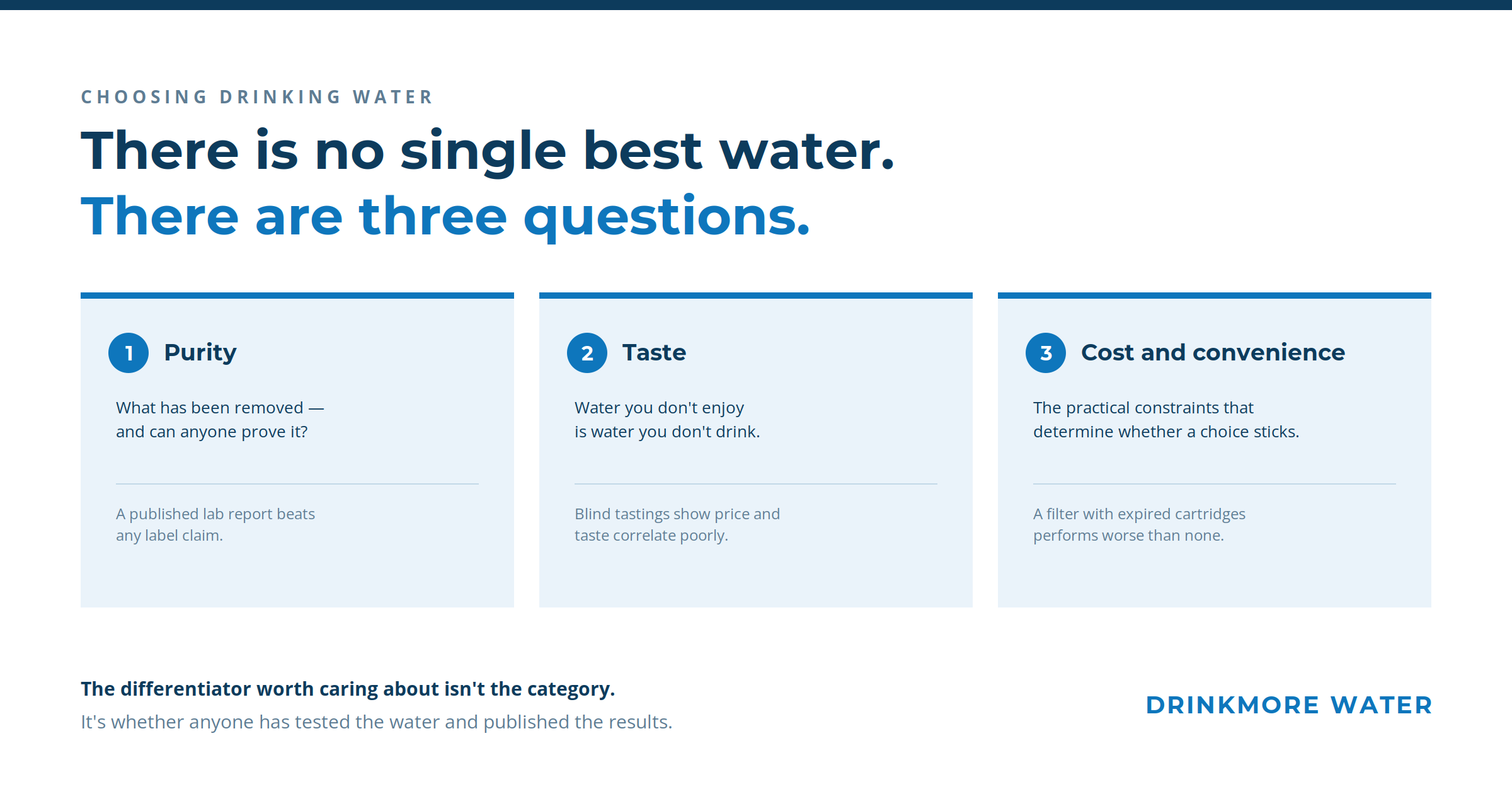
That’s the question worth asking any brand. Not “is it pure?” but “where is the lab report?”
We publish ours. DrinkMore Water is tested by Eurofins, an independent accredited laboratory, and the complete report is posted on our water analysis page rather than summarized into a marketing claim. Our finished water is bottled at approximately 1.2 ppm TDS — well under the 10 ppm ceiling required for the purified designation.
Most national brands publish a one-page water quality summary. Very few publish the underlying lab data.
What Does a Water Tasting Award Actually Mean?
Taste awards get thrown around loosely, so it’s worth knowing which ones involve blind judging.
The Berkeley Springs International Water Tasting, held annually in Berkeley Springs, West Virginia, is the largest and longest-running competition of its kind. Ten trained media judges evaluate waters blind across appearance, aroma, taste, mouthfeel, and aftertaste — the same structure as a wine tasting. Waters are scored by category, so purified water competes against purified water rather than against mineral water.
At the 35th competition in February 2025, DrinkMore Water won the gold medal for Best Purified Drinking Water. Over 80 entries came from four continents, sourced across nineteen states, four Canadian provinces, and eight countries. It was the first year we entered. We did not win in 2026 – that year’s gold went to Aquae A.M.O.R.E. of Costa Mesa, California. We mention that because a brand that only tells you about the years it won tells you something about itself.
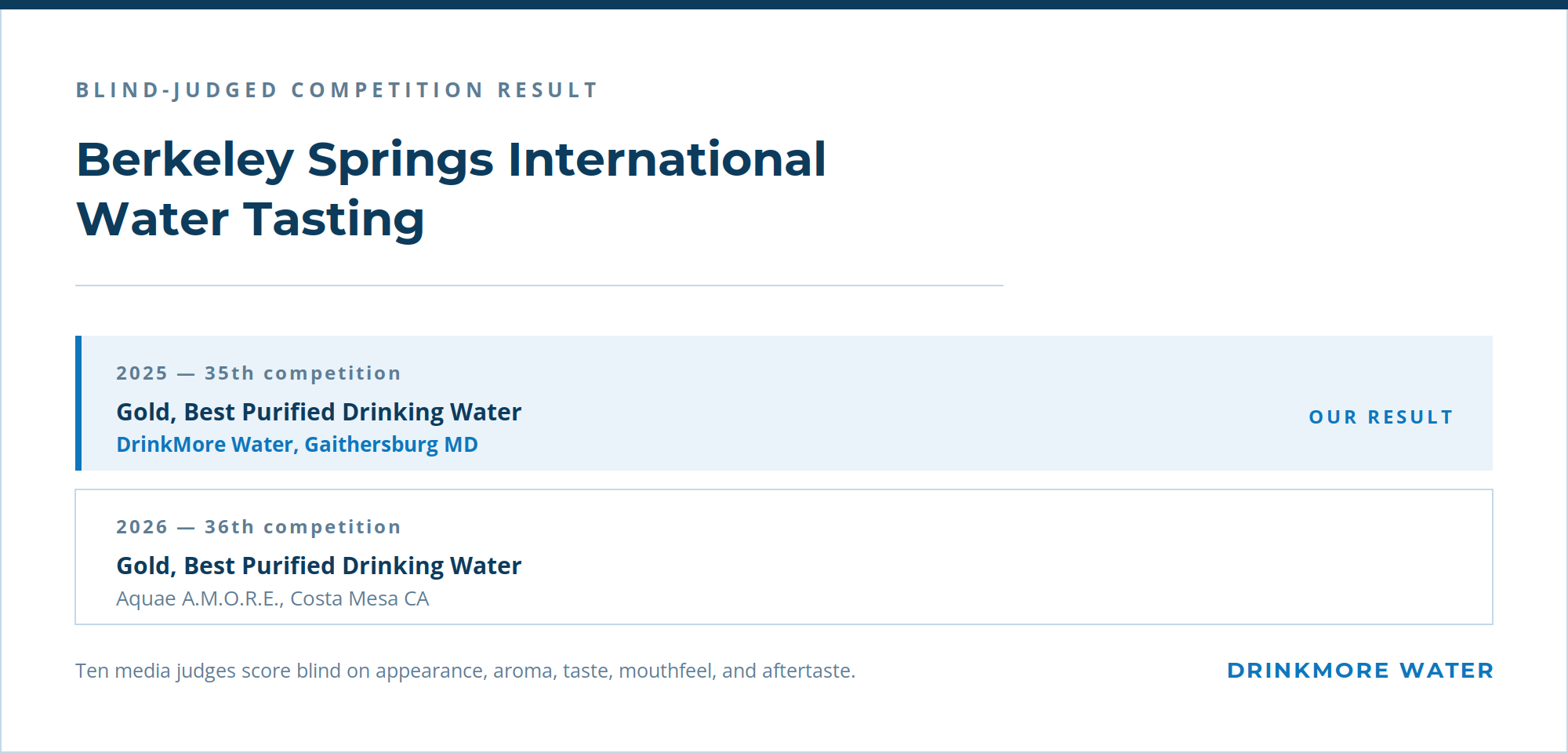
More context on the competition and our other recognitions is on our awards page.
Purified vs. Spring Water: Which Is Better?
This is the central question in most bottled water decisions, and the honest answer is that they optimize for different things.
Spring water preserves source character. The dissolved minerals give it a distinct taste — a flavor profile, essentially, determined by the rock it moved through. If you like a specific spring water, you like that geology. The tradeoff is that whatever else is in that aquifer comes along with the minerals, and treatment is intentionally minimal.
Purified water removes source character entirely. Reverse osmosis strips dissolved solids down to near nothing, which means contaminants and minerals both leave. What you get is consistent: the same water in January and July, regardless of rainfall or seasonal shifts in the source.
That consistency is underrated. Spring water composition varies with the seasons. Purified water is manufactured to a specification and verified against it continuously.
The mineral objection comes up often, and it deserves a straight answer: drinking water is a minor source of dietary minerals for almost everyone. The calcium in a liter of mineral water is a fraction of what a serving of dairy or leafy greens delivers. We go deeper in our article on minerals in drinking water.
How Is Purified Bottled Water Made?
Understanding the process makes brand claims much easier to evaluate.
At our Gaithersburg plant, incoming water passes through pre-filtration and activated carbon first. Carbon removes chlorine — necessary both for taste and because chlorine oxidizes and destroys reverse osmosis membranes.
Every drop then passes through roughly twenty layers of reverse osmosis membranes. If purity varies from specification even slightly, an alarm triggers and the entire system shuts down. Out-of-spec water cannot reach a bottle.
Because our process removes all chlorine, we disinfect with two chemical-free technologies instead. Ultraviolet light comes first: water passes through chambers where specific wavelengths destroy the genetic material of any microorganism present. A final UV pass occurs before water reaches our stainless steel storage tanks.
Ozone is the second layer, introduced right at the reverse osmosis exit and used at several points to keep the entire system sanitary. Ozone oxidizes a broad range of contaminants and is effective against organisms like Cryptosporidium that resist chlorination entirely. It then breaks down into ordinary oxygen, leaving no chemical residue.
The complete walkthrough is on our water purification process page, and you can see the facility on our bottling plant page.
What About the Bottles Themselves?
Container material matters more than most brand rankings acknowledge.
Single-use PET bottles are lightweight, cheap, and recyclable, but they’re designed for one trip. Heat exposure — a hot car, a warm warehouse — is where most consumer concern concentrates.
Polycarbonate bottles historically raised BPA questions. We’ve written a full guide on BPA in water bottles covering what the research actually shows and what to look for on a label.
Glass is inert and doesn’t interact with contents at all, which is why brands like Mountain Valley use it. It’s also heavy and breakable, which is why most don’t.
Returnable multi-gallon bottles used in home and office delivery occupy a middle ground: they’re washed, sanitized, and inspected between fills, and each bottle replaces dozens of single-use containers over its service life.
How to Choose a Bottled Water Brand: A Checklist
Skip the packaging. Ask these five questions instead.
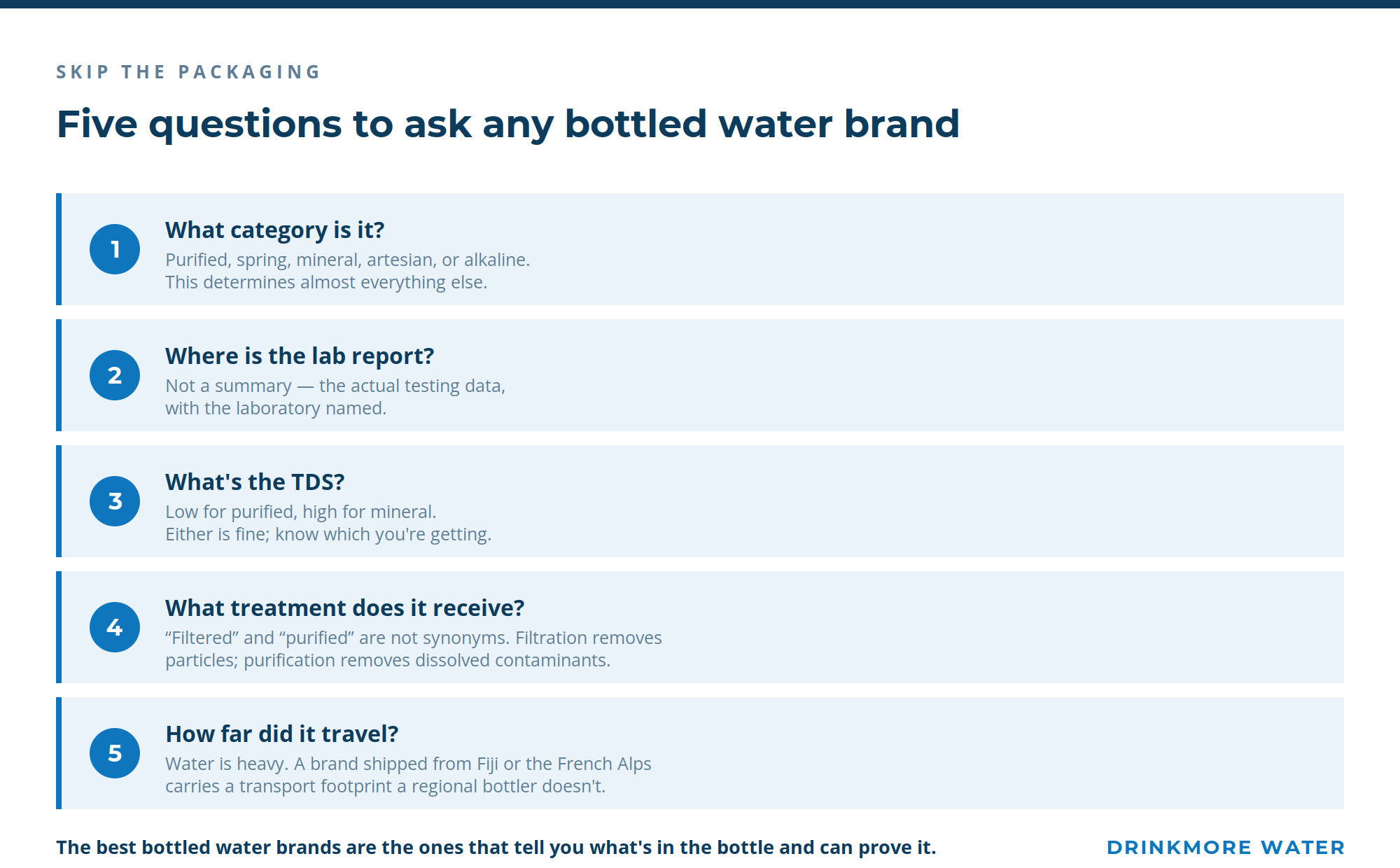
We explain the distinction between filtration and purification in purified water vs. tap water.
That last point is where local bottlers have a structural advantage that no national brand can match — and it’s worth weighing alongside purity and taste.
Getting Purified Water Delivered in DC, Maryland, and Virginia
If you’ve decided purified water is what you want, delivery removes the recurring problem of hauling cases home from the store.
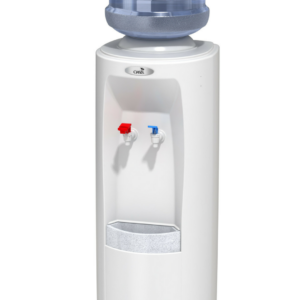
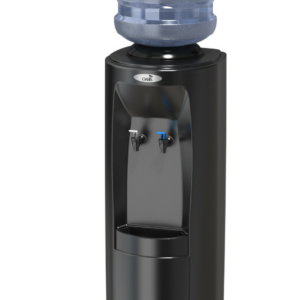
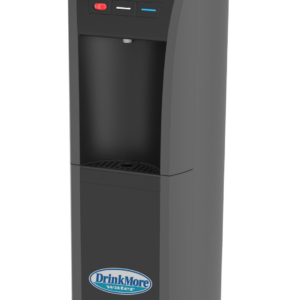
DrinkMore Water has bottled and delivered purified water throughout the DC, Maryland, and Northern Virginia area for decades. Our home water delivery service brings reverse-osmosis purified water to your door on a schedule you set, in returnable bottles we sanitize and inspect between fills. If you’d rather skip bottles altogether, our bottleless water coolers connect directly to your water line and purify on site.
You can see the full range of options and current pricing at DrinkMore Water. For offices, events, weddings, and conferences, DrinkMore Custom Water bottles the same purified water under your own custom label.
No pressure either way — but if you’ve read this far, you now know exactly which questions to ask us, and you should ask them.
The Bottom Line on the Best Bottled Water Brands
The best bottled water brands are the ones that tell you what’s in the bottle and can prove it. Category determines character: purified water gives you consistency and near-zero dissolved solids, spring and mineral water give you source character and dissolved minerals, alkaline water gives you elevated pH.
Beyond that, the differentiators are transparency and verification. A published third-party lab report is worth more than any tagline. A blind-judged tasting result is worth more than a bottle design. Everything else is packaging.
Frequently Asked Questions
What is the cleanest bottled water brand?
Cleanliness is best measured by total dissolved solids plus published third-party contaminant testing. Purified waters treated by reverse osmosis or distillation have the lowest TDS by definition — under 10 ppm to carry the “purified” label. The more useful question is which brands publish complete independent lab reports rather than summaries.
Is purified water better than spring water?
Neither is universally better. Purified water is more consistent and contains near-zero dissolved solids because reverse osmosis removes contaminants and minerals alike. Spring water retains source minerals and a distinct taste but varies seasonally and receives minimal treatment. Choose based on whether you value consistency or source character.
What bottled water won best in the world?
The Berkeley Springs International Water Tasting awards gold medals by category each February. DrinkMore Water of Gaithersburg, Maryland won gold for Best Purified Drinking Water at the 35th competition in 2025. In 2026, that category’s gold went to Aquae A.M.O.R.E. of Costa Mesa, California.
Does expensive bottled water taste better?
Not reliably. Blind tastings routinely rank inexpensive and regional waters above premium imports, because judges evaluate appearance, aroma, taste, mouthfeel, and aftertaste without seeing the bottle. Price largely reflects packaging, transport distance, and marketing rather than measurable water quality.
What does TDS mean on bottled water?
TDS stands for total dissolved solids — the combined concentration of minerals, salts, and metals dissolved in the water, measured in parts per million. Purified water is under 10 ppm. Mineral water is above 250 ppm by definition. Neither number alone indicates safety without contaminant-specific testing.
Is bottled water safer than tap water?
It depends on the specific bottler and the specific utility. Tap water is regulated by the EPA, bottled water by the FDA, with broadly comparable standards. The practical difference is treatment: purified bottled water undergoes reverse osmosis, which removes dissolved contaminants that municipal treatment is not designed to eliminate.
What to Expect
Discover the Difference

30 years Experience

Fast Turnaround Time

Excellent Customer Service

State-Of-The-Art Purification

Made in the USA

Delivered to you!
Testimonials

“10 out of 10. Delivery guy is the best!”
“Excellent water, excellent service all around! Have been using them for years.”
“Very reliable company. Delivers as promised.”
“Everyone here is always nice and accommodating. Never waited and I get unloaded quickly.”
Request Form
We would love to hear from you! Please fill out this form and we will get in touch with you shortly.