Types of Water: Tap, Spring, Distilled, Filtered & Purified
Choosing drinking water can be confusing. Tap, spring, distilled, filtered, and purified water differ in where they come from, how they are treated, and what may remain after treatment.
DrinkMore Water has purified and delivered drinking water throughout Maryland, Virginia, and Washington, DC since 1993. This guide combines that experience with practical information to help you compare the most common types of water.
How DrinkMore Water Evaluates Drinking Water
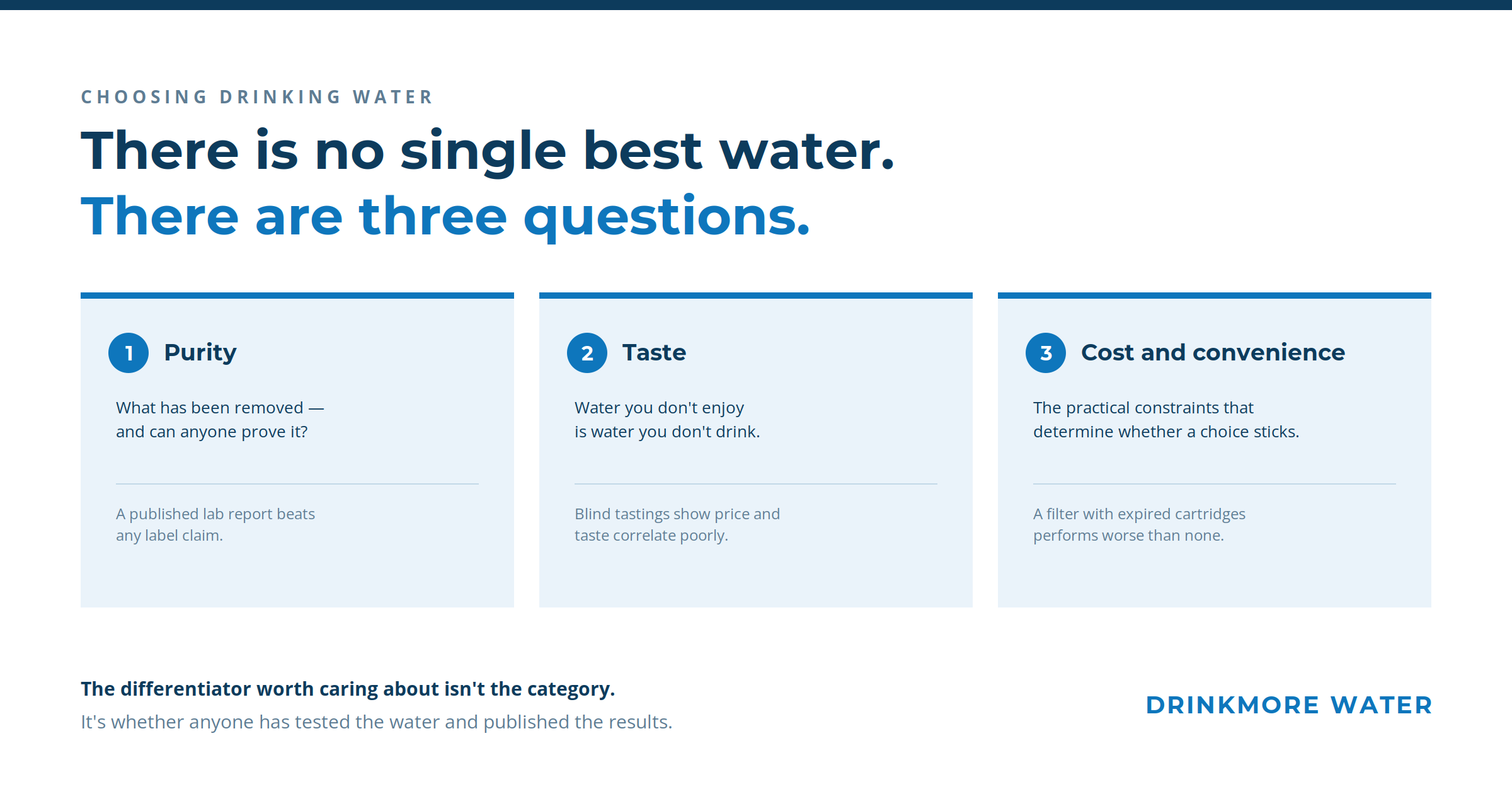
When comparing drinking water, we look beyond the name on the label. Three factors provide a more useful picture:
-
Source: Where the water originated, such as rivers, reservoirs, aquifers, or private wells.
-
Treatment: Which water treatment and filtration methods were used.
-
Testing: Whether independent laboratory results verify the quality of the finished water.
Contact us online to learn more about our purified water services.
Tap Water
Tap water is usually surface water drawn from rivers or reservoirs, then treated by a city or public water system. Some communities and homes instead rely on groundwater from aquifers or private wells.
How Tap Water Is Treated in DC
In the Washington, DC area, public water primarily comes from rivers, including the Potomac and Patuxent. City water treatment commonly includes:
-
Flocculation: Chemicals help small particles clump together so they can be removed.
-
Sand filtration: Water passes through filtering material that captures sediment and debris.
-
Disinfection: Chlorine is added to control bacteria and other microorganisms.
What Can Affect Tap Water Quality?
Public water is treated to meet drinking-water requirements, but its quality and taste may change as it moves from the treatment plant through distribution pipes.
Factors that can affect tap water include:
-
The original water source
-
Seasonal runoff and water temperature
-
Water flow and treatment conditions
-
The age and condition of local or household plumbing
-
Minerals that contribute to water hardness and hard water buildup
There may also be a risk of lead in tap water when lead is present in service lines, fixtures, or plumbing.
Tap Water Quality and Cost
Tap water is generally the least expensive drinking-water option. However, chlorine, minerals, and other dissolved substances can affect its taste, odor, and consistency.
In our experience serving homes and offices across the DMV, chlorine flavor, mineral aftertaste, and inconsistent taste are common reasons people explore alternatives to tap water. These concerns do not identify a specific contaminant, but they can shape the everyday drinking experience.
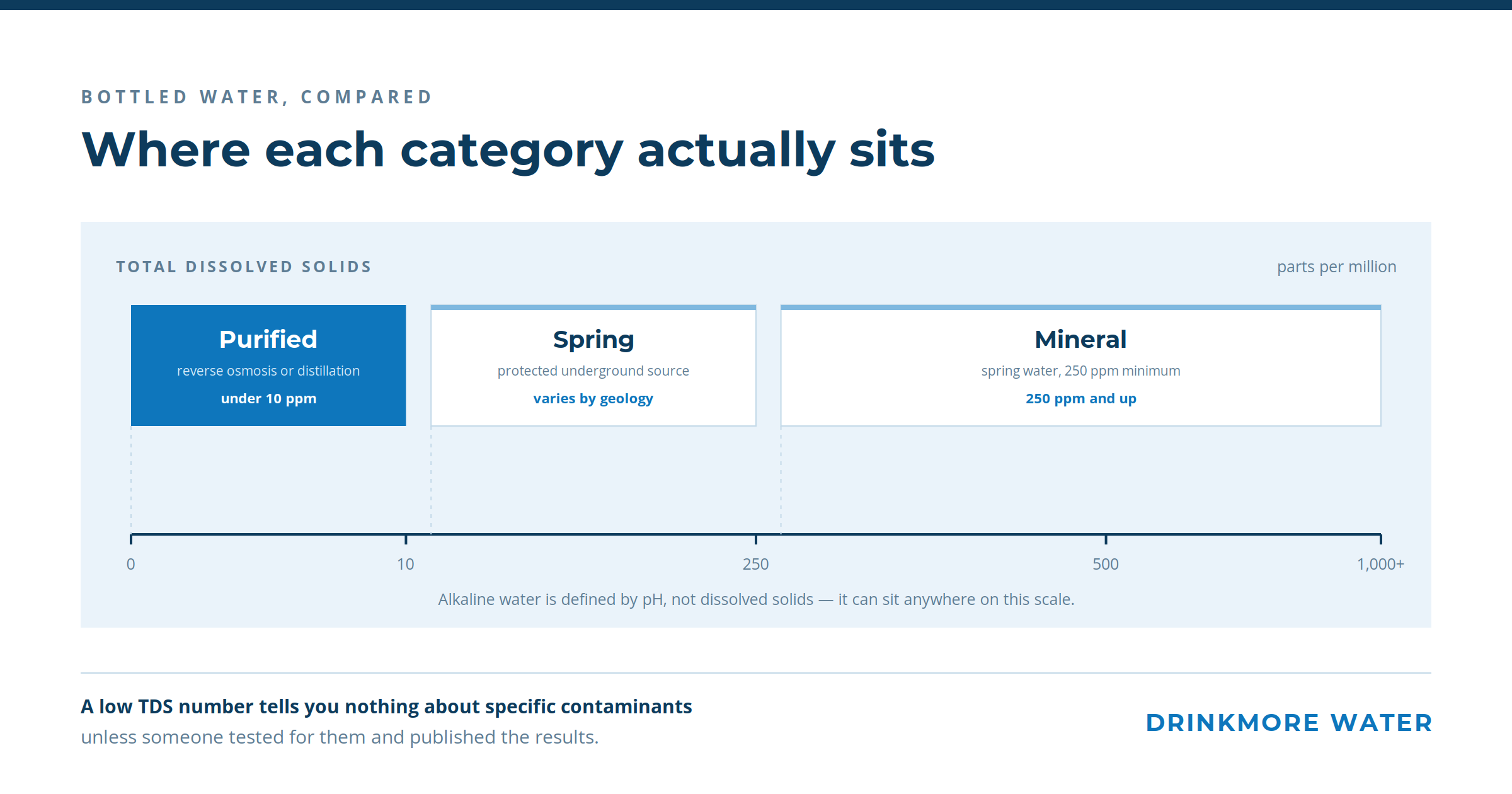
Total dissolved solids, or TDS, describe the amount of dissolved material in water. A higher reading does not identify a specific contaminant or determine whether water is safe, but it can help explain differences in taste and mineral content. DC tap water ranges from 200 PPM to 400+ PPM in TDS (total dissolved solids).
If you are comparing convenience, taste, and treatment methods, review how purified water differs from tap water.
Spring Water
Spring water comes from an underground formation where water naturally flows to the surface. Although the source is different from most city water, spring water is not the same as purified water.
Spring Water vs. Purified Water
Spring water can contain naturally occurring minerals and other substances found in groundwater. Its composition depends on the source and the water treatment used before bottling.
-
Spring water is defined mainly by its source.
-
Purified water is defined by the treatment process and resulting purity.
From a water-treatment perspective, knowing the source is only the first step. The treatment methods and finished-water testing provide a clearer view of what is ultimately delivered to the customer.
What “Pure” Water Really Means
Marketing language such as “100% pure spring water” may describe where the water came from rather than how thoroughly it was treated. The source alone does not show which dissolved substances remain in the finished water.
How Spring Water Is Bottled
Spring water may be collected at its source and transported to a bottling facility. Treatment varies by producer, but it may include disinfection and carbon filtration.
Carbon filters can improve taste and remove chlorine, but carbon filtration alone does not remove every dissolved mineral, metal, nitrate, or other substance.
Distilled Water
Distilled water is made by boiling water and collecting the cooled steam. Many minerals and metals have higher boiling points than water, so they remain behind during distillation.
How Distillation Works
-
Water is heated until it produces steam.
-
The steam separates from many dissolved solids.
-
The steam is captured, cooled, and condensed back into water.
Distillation removes many impurities, but some volatile compounds may require additional treatment. This is why DrinkMore Water uses complementary treatment stages rather than relying on one purification method alone.
Filtered Water
Filtered water is commonly made by passing tap water through one or more filters. Carbon filters are often used to reduce chlorine and improve taste and odor.
Customers often begin exploring filtration because they notice chlorine flavor, mineral aftertaste, or inconsistent tap-water taste. A filter may help, but its performance depends on what it was designed to reduce and whether it is maintained and replaced properly.
What Water Filtration Can Do
The result depends on the filter type, condition, and certification. Common filtration methods include:
-
Carbon filters: Often used to reduce chlorine, taste, and odor.
-
Micron filters: Designed to capture particles above a specified size.
-
Specialty filters: Made to target particular substances.
After more than 30 years working with drinking-water purification, our practical advice is to match the filter to the substances you want to address. Basic filtration can improve water, but it is not automatically equivalent to purification.
Purified Water
Purified water is treated to remove a broad range of dissolved and suspended impurities. What makes it different is the treatment process, not the original water source.
What Makes Purified Water Different?
DrinkMore Water relies on a multi-stage process because no single treatment method addresses every water-quality concern. Purification systems may combine:
-
Reverse osmosis
-
Distillation
-
Deionization
-
Carbon filtration
-
Particle filtration and disinfection
Using several treatment stages helps produce water with a clean, consistent taste even when source-water conditions vary.
Our 12-Step Purification Process
Our 12-step purification process combines complementary technologies to remove impurities and maintain consistent quality. The process reflects decades of hands-on experience producing purified water for homes and businesses across the DMV.
We also use independent laboratory testing to verify the quality of the finished water. In the 2026 Eurofins analysis, 260 of 273 analyte results were below the laboratory reporting limit, including all 18 PFAS compounds tested. The remaining quantified results were reported at trace levels.
This combination of multi-stage treatment and independent testing provides more meaningful evidence than a source claim alone.
Which Type of Water Is Best to Drink?
The best choice depends on what matters most to you. Based on our experience helping households and workplaces compare their options, we recommend considering taste, treatment, testing, convenience, and consistency together.
-
Choose tap water for the lowest cost and direct household access.
-
Choose spring water if you prefer water defined by an underground source.
-
Choose distilled water when you need water produced through steam collection and condensation.
-
Choose filtered water when your main goal is improving taste or reducing specific substances.
-
Choose purified water when you want extensive treatment and a clean, consistent taste.
Whatever type you choose, look for clear information about the source, treatment process, filter maintenance, and finished-water testing.
Schedule Purified Bottled Water Delivery in MD, DC, or VA
DrinkMore Water has served the DMV since 1993 with purified bottled water and reliable local delivery. Our 12-step purification process and independent testing support our commitment to pure, great-tasting water with consistent quality.
Customers also receive live, local support from people who can help determine the right products, quantity, and delivery schedule for their home or office.
Contact us online to schedule bottled water delivery in Maryland, Virginia, or Washington, DC!
Frequently Asked Questions
Is spring water the same as purified water?
No. Spring water is categorized by its underground source, while purified water is categorized by the treatment it receives. Spring water may still contain naturally occurring minerals and other dissolved substances.
Is tap water safe to drink?
Public tap water is treated to meet drinking-water requirements. Its taste and quality can still vary with the water source, treatment conditions, distribution system, and household plumbing.
What is the difference between city water and well water?
City water is supplied and treated by a public water system, often using surface water from rivers or reservoirs. Well water comes from underground aquifers through private wells, so the property owner is generally responsible for testing and treatment.
What causes hard water?
Hard water contains higher levels of dissolved minerals, particularly calcium and magnesium. Water hardness can leave scale on fixtures and affect soap performance, but hardness is different from contamination.
Is wastewater used as drinking water?
Wastewater is water that has already been used by homes, businesses, or industry. It must undergo extensive treatment before it can be safely discharged, reused, or introduced into a drinking-water system under applicable requirements.
What to Expect
Discover the Difference

30 years Experience

Fast Turnaround Time

Excellent Customer Service

State-Of-The-Art Purification

Made in the USA

Delivered to you!
Testimonials

“10 out of 10. Delivery guy is the best!”
“Excellent water, excellent service all around! Have been using them for years.”
“Very reliable company. Delivers as promised.”
“Everyone here is always nice and accommodating. Never waited and I get unloaded quickly.”
Request Form
We would love to hear from you! Please fill out this form and we will get in touch with you shortly.