PFAS in Drinking Water: What They Are, What’s Regulated, and How to Remove Them
PFAS in Drinking Water: What They Are, What’s Regulated, and How to Remove Them
PFAS in drinking water are per- and polyfluoroalkyl substances — a family of thousands of synthetic chemicals nicknamed “forever chemicals” because their carbon-fluorine bonds resist breaking down in the environment or the human body. The EPA set enforceable federal limits of 4 parts per trillion for PFOA and PFOS in April 2024. Reverse osmosis, granular activated carbon, and ion exchange are the treatments proven to remove them.
That’s the summary. The regulatory picture has shifted twice since 2024, so the details below reflect where things actually stand as of July 2026.
What Are PFAS, Exactly?
PFAS are synthetic chemicals built around chains of carbon atoms bonded to fluorine. That bond is one of the strongest in organic chemistry, which is precisely why these compounds were so useful — and precisely why they persist.
Manufacturers have used PFAS since the 1940s in nonstick cookware, stain-resistant carpet and upholstery, waterproof clothing, grease-resistant food packaging, cosmetics, and firefighting foam. The properties that made them valuable are the same ones that make them stubborn.
There are thousands of individual PFAS compounds. A handful have been studied extensively:
- PFOA (perfluorooctanoic acid) — historically used in nonstick coating manufacture
- PFOS (perfluorooctane sulfonic acid) — used in stain repellents and firefighting foam
- PFHxS (perfluorohexane sulfonic acid)
- PFNA (perfluorononanoic acid)
- HFPO-DA, commonly called GenX chemicals — developed as a PFOA replacement
- PFBS (perfluorobutane sulfonic acid)
PFOA and PFOS were largely phased out of U.S. manufacturing years ago. They remain in water supplies anyway, which is the whole problem with a chemical that doesn’t degrade.
How Do PFAS Get Into Drinking Water?
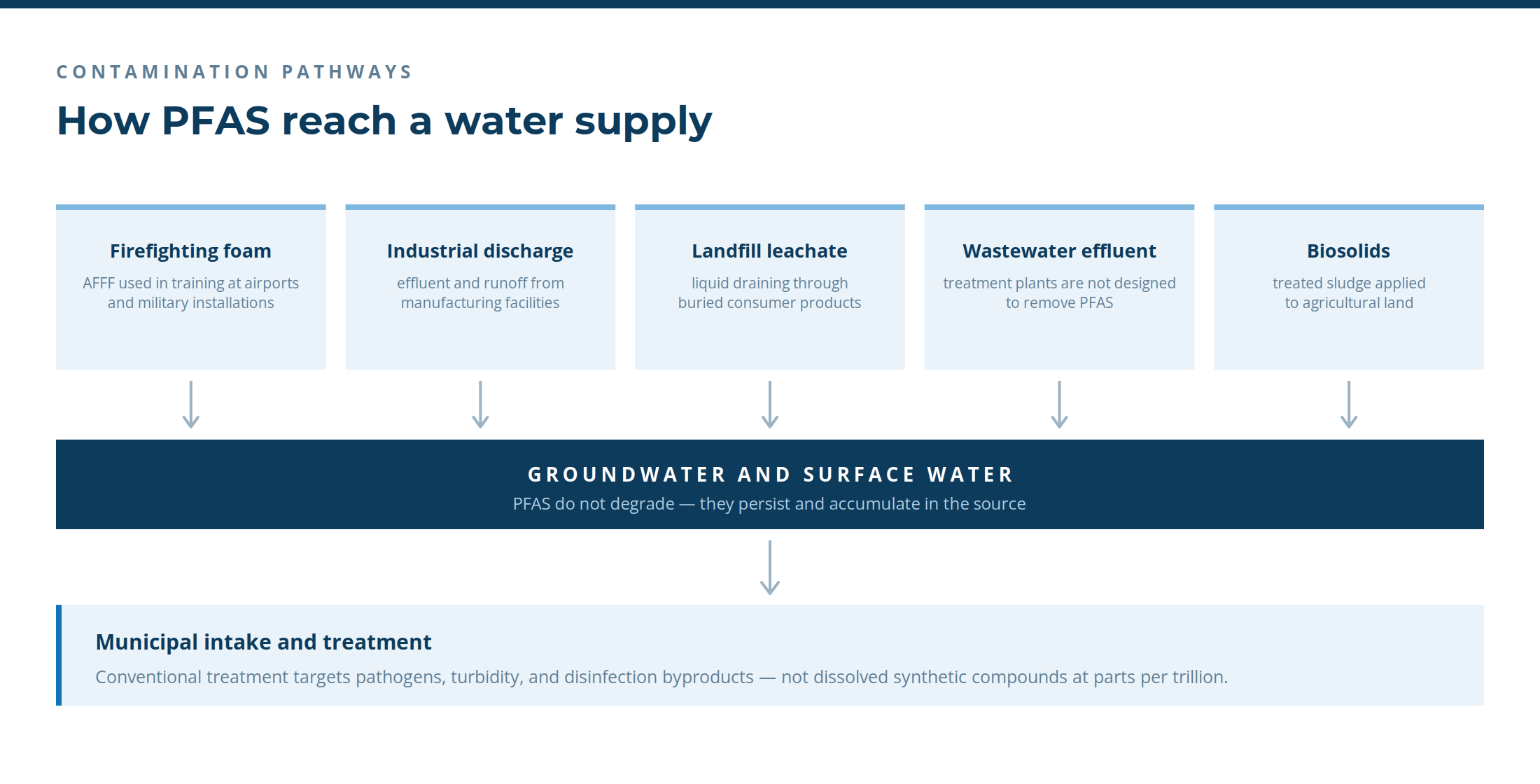
PFAS reach water supplies through several routes: industrial discharge from manufacturing facilities, firefighting foam used at airports and military installations, landfill leachate, wastewater treatment plant effluent, and land application of biosolids.
Military and airport sites are a recurring source nationally, because aqueous film-forming foam used in fire training contained high PFAS concentrations for decades. Groundwater near those sites is a well-documented concern.
What Are the EPA Limits for PFAS in Drinking Water?
This is where the picture has changed, so the sequence matters.
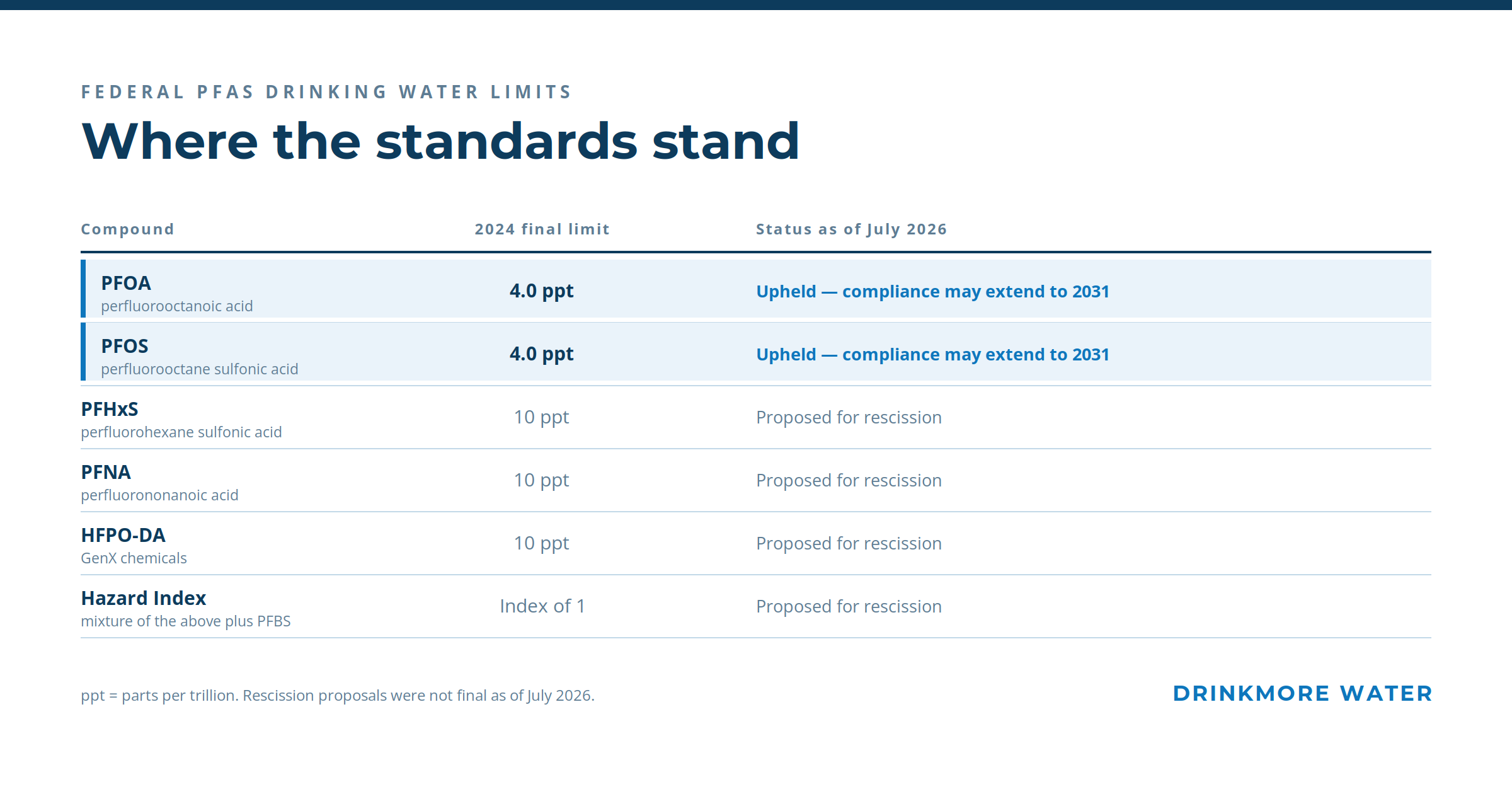
April 2024: The EPA finalized the first National Primary Drinking Water Regulation for PFAS. It set enforceable Maximum Contaminant Levels for six compounds and required public water systems to comply by April 26, 2029.
May 2025: The EPA announced it would keep the PFOA and PFOS limits, extend the compliance deadline by two years, and rescind the standards for the other four.
May 18, 2026: The EPA formally proposed two rules carrying that plan out. One upholds the PFOA and PFOS limits while letting water systems request two additional years — to April 26, 2031 — to comply. The other would rescind the regulatory determinations and limits for PFHxS, PFNA, HFPO-DA (GenX), and the Hazard Index mixture standard. The public comment period closed July 20, 2026.
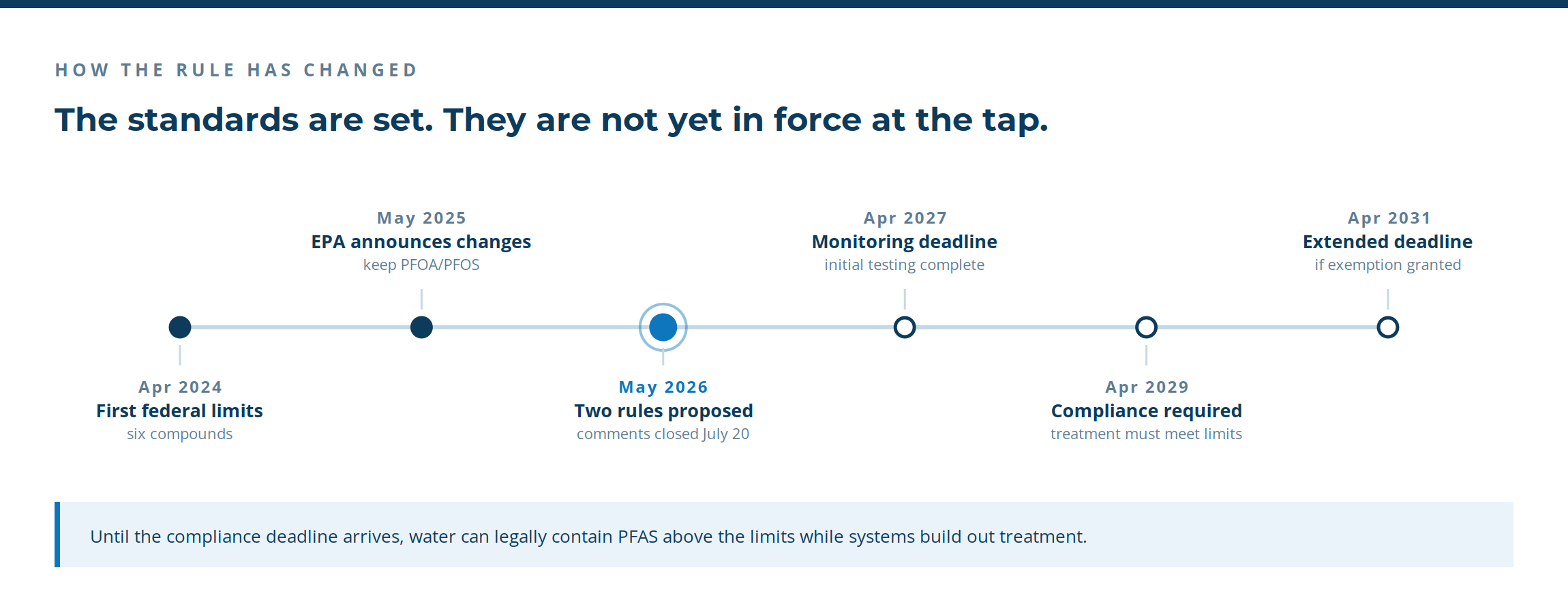
ppt = parts per trillion. Rescission proposals were not final as of July 2026.
Two points worth understanding clearly.
First, 4 parts per trillion is an extraordinarily small quantity — roughly four drops spread across twenty Olympic swimming pools. The EPA set the limit that low because its health-based goal for PFOA and PFOS is zero. There is no level the agency considers free of risk; 4 ppt reflects what laboratories can reliably measure and what treatment can reliably achieve.
Second, the standards are not yet in force at the tap. Public water systems must complete initial PFAS monitoring by April 2027. Treatment compliance isn’t required until 2029 at the earliest, and possibly 2031. Until then, water can legally contain PFAS above the limits while systems build out treatment.
Separately, EPA’s Unregulated Contaminant Monitoring Rule (UCMR 5) requires all public systems serving 3,300 or more people, plus a sample of smaller ones, to test for 29 different PFAS. That data is public.
What Are the Health Concerns With PFAS?
PFAS accumulate in the body over time rather than clearing quickly, which is why exposure at very low concentrations is treated seriously.
According to the EPA and the Agency for Toxic Substances and Disease Registry, peer-reviewed research has associated PFAS exposure with:
- Increased risk of certain cancers, particularly kidney and testicular cancer
- Elevated cholesterol
- Reduced antibody response to vaccines
- Thyroid hormone disruption
- Liver enzyme changes
- Decreased birth weight and other developmental effects
- Pregnancy-induced hypertension and preeclampsia
These are associations drawn from epidemiological and toxicological studies, not a claim that any individual exposure causes any specific outcome. If you have concerns about your own exposure, that’s a conversation for your physician — blood testing for PFAS is available.
The reason regulators moved despite scientific uncertainty is the combination of persistence, bioaccumulation, and near-universal exposure. Most Americans have detectable PFAS in their blood.
How Do You Find Out If PFAS Are in Your Tap Water?
Three practical routes.
Read your Consumer Confidence Report. Every community water system publishes one annually, and PFAS monitoring results increasingly appear in them. Your utility posts it online, usually by July 1 for the prior year.
Check EPA’s UCMR 5 database. Because systems serving 3,300+ people must test for 29 PFAS compounds, results for most utilities in the DC, Maryland, and Northern Virginia area are publicly available.
Test independently. Certified labs offer residential PFAS testing. It costs more than a general water test because the analytical methods required to measure parts per trillion are demanding. Our guide to testing water quality at home covers what’s worth paying for.
For the broader picture of what municipal treatment does and doesn’t address, see our pillar guide to what’s in tap water.
What Removes PFAS From Drinking Water?
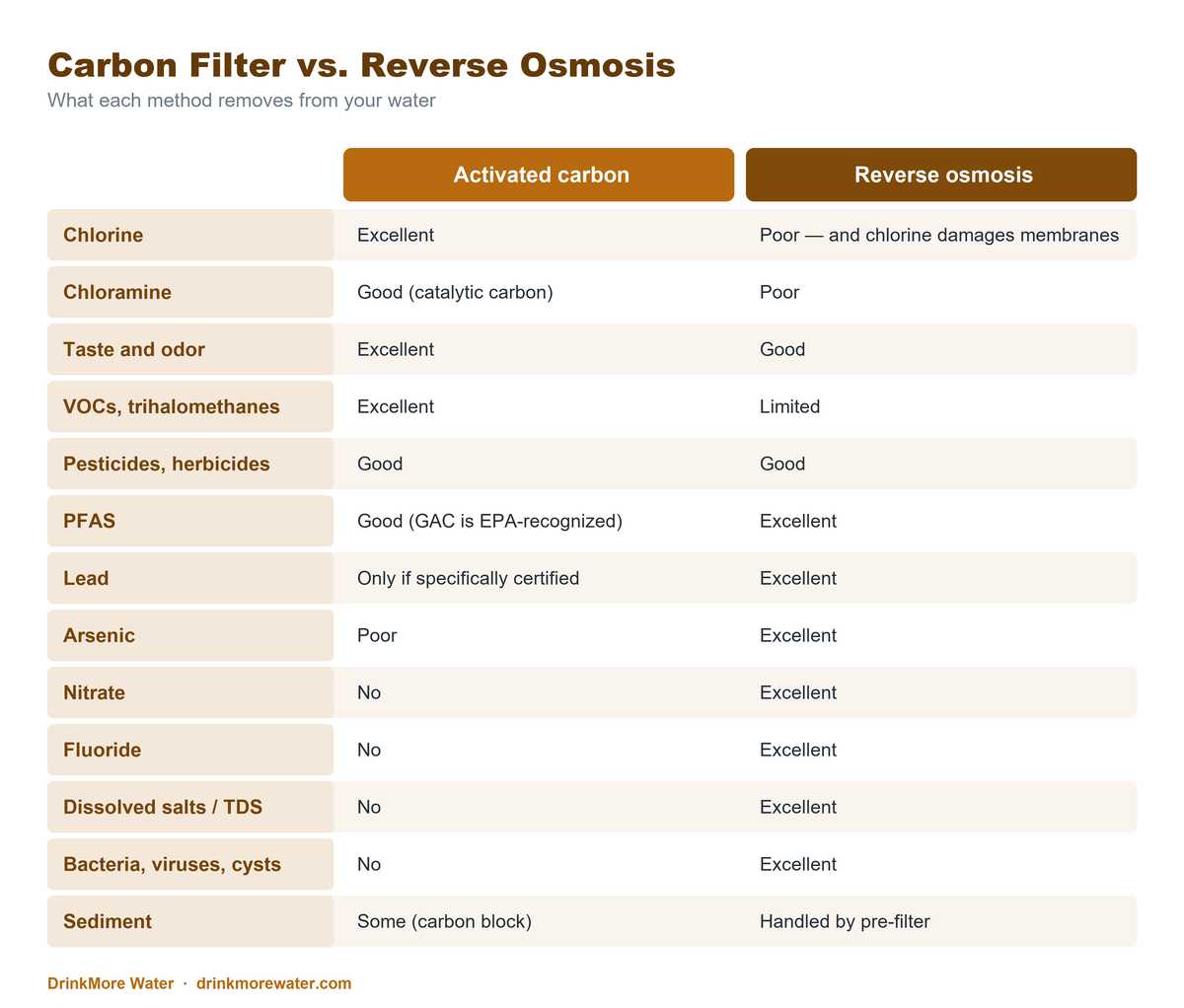
Not everything does. This is the section where a lot of consumer products overpromise.
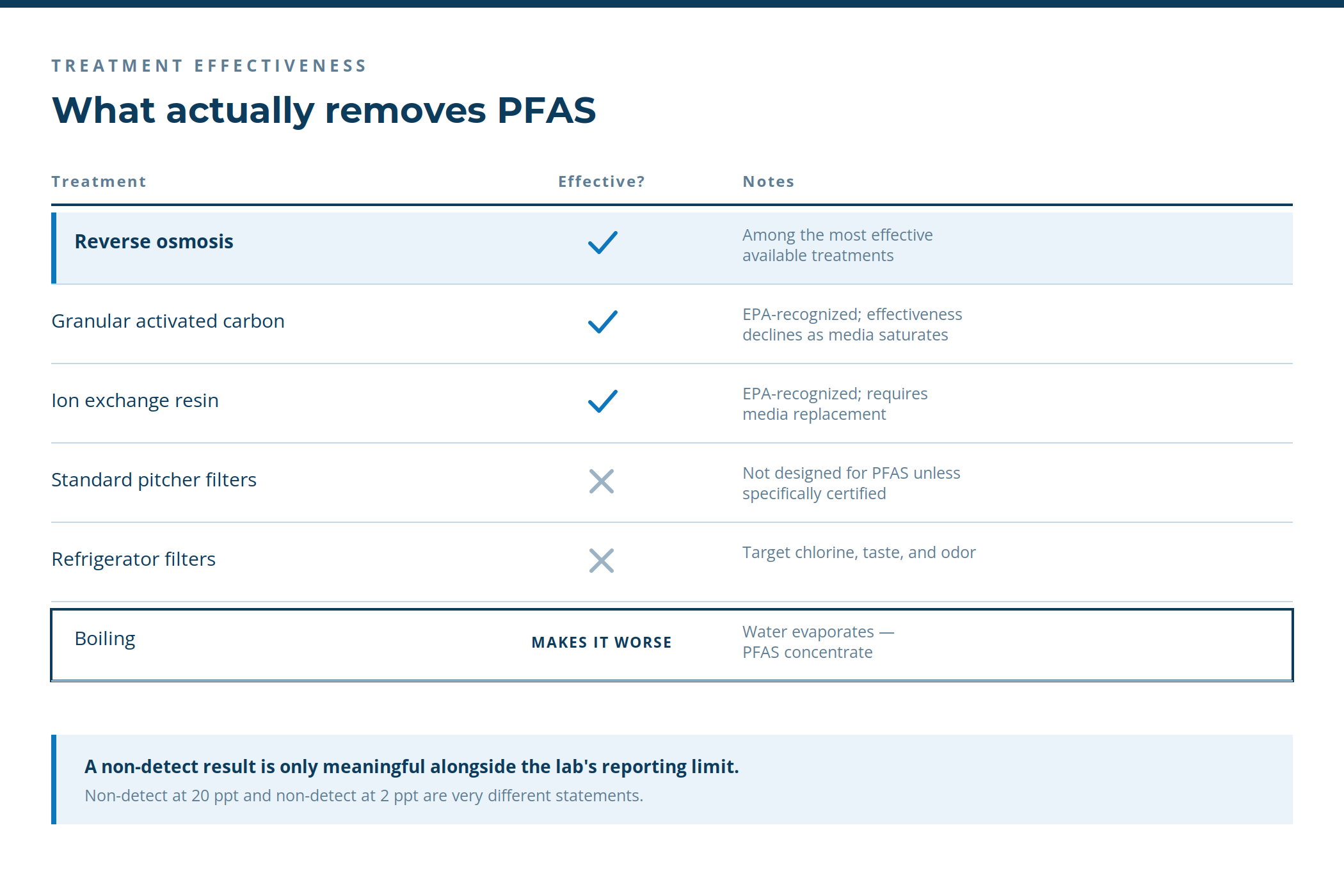
Boiling deserves emphasis because the instinct is so common. Boiling kills bacteria. It does nothing to PFAS except concentrate them as water volume decreases.
The EPA identifies granular activated carbon, ion exchange, and reverse osmosis or nanofiltration as the treatment technologies capable of meeting the PFAS standards. Reverse osmosis performs strongly because it separates by molecular size and charge rather than relying on adsorption capacity that gradually exhausts.
If you’re using a point-of-use filter, look for certification specifically to NSF/ANSI standards covering PFAS reduction. General “filtered water” claims mean nothing here.
Does DrinkMore Water Remove PFAS?
Reverse osmosis is the core of our purification process, and it’s one of the most effective PFAS treatments available.
At our Gaithersburg plant, incoming municipal water passes through pre-filtration and activated carbon before reaching the membranes — so the water encounters two PFAS-capable treatments in sequence. Every drop then passes through roughly twenty layers of reverse osmosis membranes. If purity varies from specification, an alarm triggers and the system shuts down automatically.
After RO, we disinfect with ultraviolet light and ozone rather than chlorine, since our process removes chlorine entirely. The complete process is documented on our water purification process page.
We test through Eurofins, an independent accredited laboratory, and publish the complete report on our water analysis page rather than a summary of it. [VERIFY: state the specific PFAS results and detection limits from the current Eurofins report — e.g., “PFOA and PFOS were non-detect at a reporting limit of X ppt in the [DATE] report.” Do not publish this section without the actual figures and reporting limits.]
That last detail matters more than most people realize: a “non-detect” result is only meaningful alongside the laboratory’s reporting limit. Non-detect at 20 ppt and non-detect at 2 ppt are very different statements. Any bottler citing non-detect results without the reporting limit is giving you half the information.
Should You Switch Away From Tap Water Over PFAS?
Here’s an honest answer rather than a sales pitch.
Most utilities in the DC, Maryland, and Northern Virginia area produce water that meets current federal standards. Municipal treatment is genuinely good at what it was designed for — pathogens, turbidity, disinfection byproducts. What conventional treatment was never designed to do is remove dissolved synthetic compounds at parts-per-trillion concentrations. That capability is being built out now, on a timeline running to 2029 or 2031.
So the reasonable options are: check your utility’s UCMR 5 results and decide based on your actual numbers; install a certified point-of-use RO or carbon system and maintain it on schedule; or use water that’s already been through reverse osmosis.
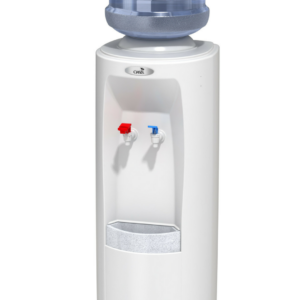
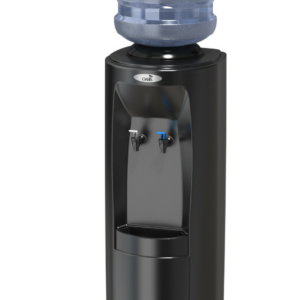
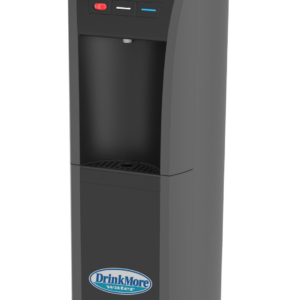
If the third option appeals, our home water delivery service brings purified water to households across the DC, Maryland, and Virginia region, and our bottleless water coolers purify at the point of use if you’d rather not handle bottles. You can compare both at DrinkMore Water. For offices and events, DrinkMore Custom Water bottles the same purified water under custom labels.
Whichever route you take, the useful move is to look at your own utility’s data first. Decisions built on your actual numbers beat decisions built on headlines.
The Bottom Line on PFAS in Drinking Water
PFAS in drinking water are regulated federally at 4 parts per trillion for PFOA and PFOS, with those limits upheld through the 2026 rulemaking and compliance deadlines proposed to extend to 2031. Standards for four other PFAS compounds have been proposed for rescission.
Reverse osmosis, granular activated carbon, and ion exchange remove PFAS. Boiling and standard pitcher filters do not. Your utility’s UCMR 5 results tell you where your own water stands, and a lab report is worth more than any claim — including ours, which is why we publish the whole thing.
Frequently Asked Questions
What is the EPA limit for PFAS in drinking water?
The EPA set enforceable limits of 4 parts per trillion each for PFOA and PFOS in its April 2024 rule. Those two limits were upheld in the May 2026 proposed rulemaking, though the compliance deadline may extend from 2029 to 2031. Limits for PFHxS, PFNA, and GenX chemicals were proposed for rescission.
Does reverse osmosis remove PFAS from water?
Yes. Reverse osmosis is among the most effective PFAS treatments available and is one of three technologies the EPA identifies as capable of meeting the federal standards, alongside granular activated carbon and ion exchange. RO membranes reject PFAS compounds by molecular size and charge rather than by adsorption.
Does boiling water remove PFAS?
No. Boiling does not remove PFAS and actually makes the problem worse. As water evaporates, PFAS remain behind in a smaller volume, increasing their concentration. Boiling is effective against bacteria and other pathogens, but it has no effect on dissolved synthetic chemicals.
How do I know if my tap water has PFAS?
Check your utility’s annual Consumer Confidence Report, then look up its results in EPA’s UCMR 5 database — public systems serving 3,300 or more people are required to test for 29 PFAS compounds. You can also order independent testing from a certified laboratory, though PFAS analysis costs more than standard water tests. The Environmental Working Group has also mapped PFAS contamination in water systems at this link: https://www.ewg.org/interactive-maps/pfas_contamination/
Are PFAS in bottled water?
It depends entirely on the source and treatment. Bottled water treated by reverse osmosis or activated carbon has undergone PFAS-capable treatment; spring water receiving only minimal filtration has not. Ask any bottler for its independent lab report, and check the laboratory’s reporting limits alongside any non-detect results.
Why are PFAS called forever chemicals?
PFAS are built on carbon-fluorine bonds, among the strongest bonds in organic chemistry. They resist breakdown by heat, water, microbes, and sunlight, so they persist in soil, water, and the human body for years or decades rather than degrading. PFOA and PFOS remain widespread despite being phased out of U.S. manufacturing.
What to Expect
Discover the Difference

30 years Experience

Fast Turnaround Time

Excellent Customer Service

State-Of-The-Art Purification

Made in the USA

Delivered to you!
Testimonials

“10 out of 10. Delivery guy is the best!”
“Excellent water, excellent service all around! Have been using them for years.”
“Very reliable company. Delivers as promised.”
“Everyone here is always nice and accommodating. Never waited and I get unloaded quickly.”

Request Form
We would love to hear from you! Please fill out this form and we will get in touch with you shortly.