Benefits of Drinking More Water: What the Evidence Supports
What Are the Benefits of Drinking More Water?
The benefits of drinking more water come from correcting dehydration rather than from consuming water in excess. Adequate hydration supports temperature regulation, blood volume and circulation, kidney function, joint lubrication, digestion, and cognitive performance. Water makes up roughly 50–60% of adult body weight, and even mild fluid loss measurably affects concentration and physical performance.
Below: what’s well supported, what’s plausible, and what’s oversold — sorted honestly.
Why Does Hydration Matter Physiologically?
Water isn’t a nutrient in the ordinary sense. It’s the medium everything else happens in.
Blood plasma is mostly water, and blood volume depends on it. Body temperature is regulated by sweat evaporation. Kidneys filter waste into urine and need adequate fluid to do it. Cartilage in joints and spinal discs holds substantial water. Digestion needs fluid at every stage — saliva, gastric secretions, nutrient transport.
When fluid drops, all of these degrade at once rather than in sequence. That’s why dehydration produces such a scattered set of symptoms: fatigue, headache, dizziness, poor concentration, constipation.
Which Benefits Are Well Supported?
Sorted by strength of evidence.
Physical performance. Fluid loss of even 1–2% of body weight measurably reduces endurance, increases perceived effort, and impairs temperature regulation during exercise. This is among the most consistently replicated findings in the hydration literature.
Cognitive function. Mild dehydration is associated with reduced attention, slower reaction time, worse short-term memory, and increased headache frequency. Effects appear at fluid deficits small enough that people don’t necessarily register thirst.
Kidney function and stone prevention. Higher fluid intake dilutes urine and reduces the concentration of stone-forming compounds. Increased fluid intake is standard clinical advice for people with a history of kidney stones.
Constipation. Adequate fluid supports normal bowel function, particularly alongside sufficient dietary fiber. Fiber without fluid can make constipation worse rather than better.
Temperature regulation. Sweating requires fluid. In heat or during exertion, dehydration directly compromises the body’s cooling mechanism — this is the pathway to heat exhaustion.
Which Benefits Are Overstated?
Being straight about this is more useful than repeating the standard list.
Weight loss. Water contains no calories and drinking it before meals may modestly reduce intake in some studies, but the effect is small and inconsistent. Replacing sugary drinks with water reduces calorie intake meaningfully — that’s the substitution doing the work, not the water itself.
“Detoxification.” Your liver and kidneys handle detoxification. Adequate hydration lets them function normally. Drinking beyond adequate does not accelerate the process or flush additional toxins. There is no toxin backlog waiting to be rinsed out.
Skin appearance. Severe dehydration affects skin turgor. In well-hydrated people, additional water intake has not been shown to reliably improve skin appearance, texture, or wrinkles.
Metabolism. Some research shows a small, short-lived increase in metabolic rate after drinking cold water. The magnitude is trivial in terms of daily energy expenditure.
Immune function. Adequate hydration supports normal physiology. Extra water doesn’t strengthen immunity.
The pattern across all five: hydration benefits come from not being dehydrated. Past that point, more water isn’t more benefit.
How Much Water Should You Actually Drink?
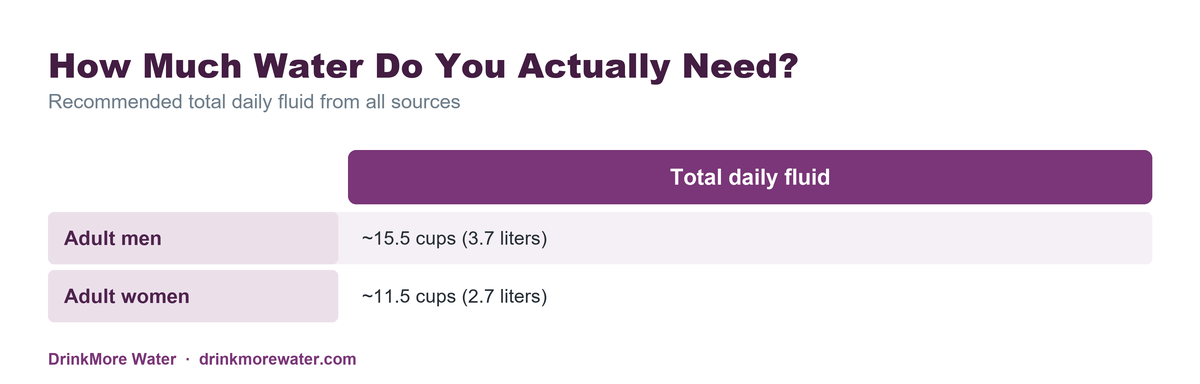
The National Academies of Sciences, Engineering, and Medicine suggest approximately:
Two clarifications matter more than the numbers themselves.
This is total fluid, not glasses of water. It includes water from food — fruits, vegetables, soups — plus milk, coffee, tea, and other beverages. Food typically contributes around 20% of total intake. The old “eight glasses a day” rule has no particular scientific basis and doesn’t account for any of this.
Individual needs vary widely. Body size, activity level, climate, pregnancy and breastfeeding, illness with fever or vomiting, and certain medications all shift requirements substantially.
For most healthy adults, thirst is a reasonable guide. Older adults are a documented exception — thirst sensation diminishes with age, which is why dehydration is more common in this group and why scheduled intake can help.
What Are the Signs You Need More Water?
Practical indicators, roughly in order of how early they appear:
- Urine color. Pale yellow suggests adequate hydration; dark yellow or amber suggests you need more. This is the simplest real-time check available. Note that B vitamins and some medications alter color independently.
- Thirst. A reasonable signal, though it lags actual fluid deficit somewhat.
- Fatigue or difficulty concentrating without another obvious cause.
- Headache, particularly in the afternoon.
- Dry mouth or lips.
- Infrequent urination — fewer than four times daily suggests low intake.
Confusion, dizziness, rapid heartbeat, or fainting indicate significant dehydration and warrant medical attention rather than a glass of water.
Can You Drink Too Much Water?
Yes, and it’s worth knowing even though it’s uncommon.
Consuming very large volumes of water rapidly can dilute blood sodium to dangerous levels — a condition called hyponatremia. Symptoms include nausea, headache, confusion, and in severe cases seizures. It has occurred in endurance athletes over-drinking during events and in water-drinking challenges.
For ordinary daily intake in a healthy adult with normal kidney function, this isn’t a practical concern. But it does mean “more is always better” isn’t correct, and anyone with kidney disease, heart failure, or on medications affecting fluid balance should follow their physician’s guidance rather than general advice.
Does the Type of Water Matter?
For hydration itself, no. Water hydrates. Tap, purified, spring, mineral, and alkaline water all deliver the same core benefit.
Where type matters is indirect, and the indirect effect is arguably the largest one in this entire article: people drink more of what tastes better to them.
Purification removes chlorine — the source of the taste and smell most associated with tap water — along with dissolved metals and minerals that contribute metallic notes. If better-tasting water means you reach for a glass instead of a soda or energy drink, that substitution matters more than anything about the water’s composition.
Access matters just as much. A bottle within reach beats a filter pitcher in the back of the refrigerator, reliably.
The other consideration is what’s in the water you’re drinking more of. If you’re increasing intake substantially, contaminant content becomes proportionally more relevant. Our guides to what’s in tap water and the health benefits of purified water cover that side.
Practical Ways to Drink More Water
Habit design beats willpower here.
- Keep water visibly within reach. Proximity drives consumption more than intention does.
- Anchor drinking to existing habits. A glass with each meal, on waking, and before bed requires no new routine.
- Substitute rather than add. Replacing one sugary drink daily delivers a bigger health effect than adding water on top of existing intake.
- Track urine color, not ounces. It’s a direct feedback signal rather than an arbitrary target.
- Increase before you need it in heat or before exercise, rather than catching up afterward.
- Make it taste good enough to want. Citrus, cucumber, mint — or water that simply doesn’t taste like chlorine.
Making Good Water Easy to Reach
The most reliable way to drink more water is to make good-tasting water the path of least resistance.
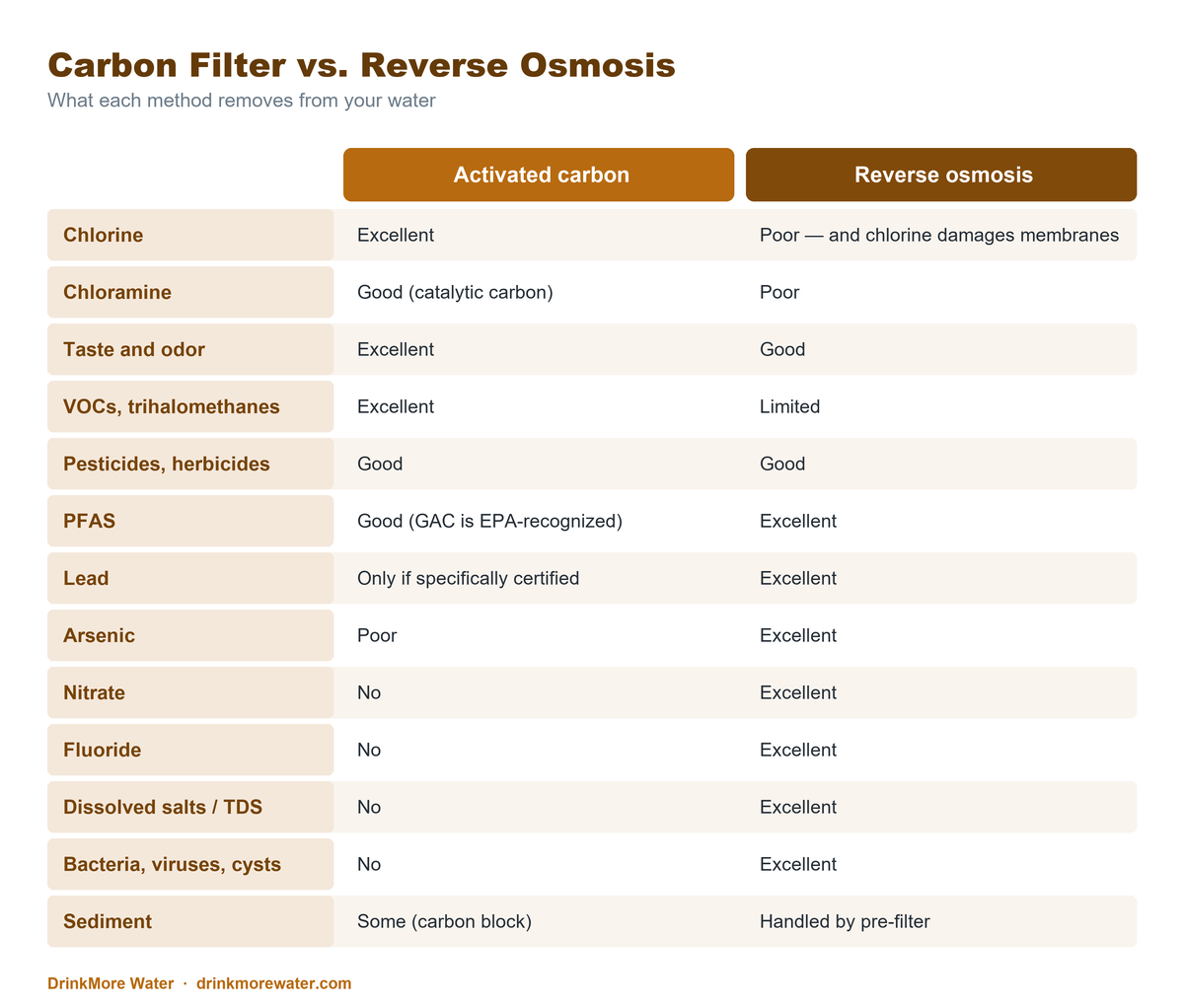
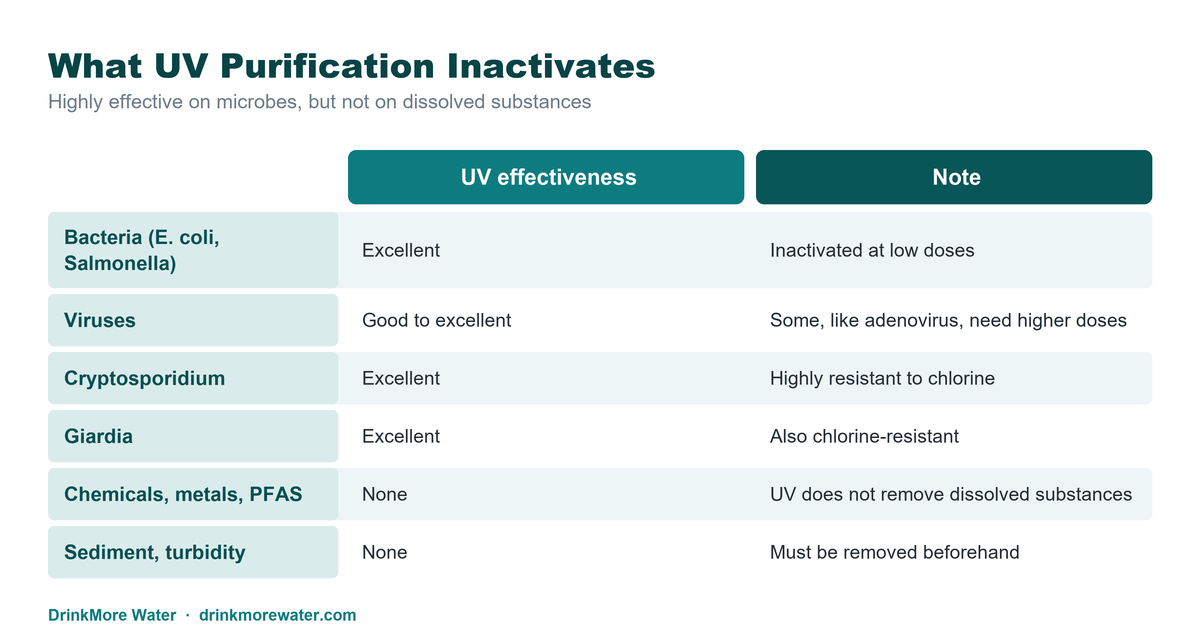
DrinkMore Water purifies by reverse osmosis at our plant in Gaithersburg, Maryland, then disinfects with ultraviolet light and ozone rather than chlorine — our process removes chlorine entirely. The result is water with no chlorine taste and no dissolved metals, bottled at approximately 1.2 ppm total dissolved solids. The full process is on our water purification process page.
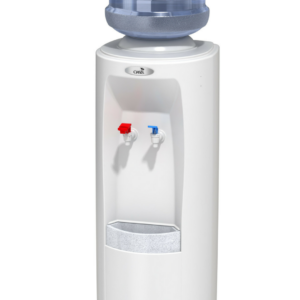
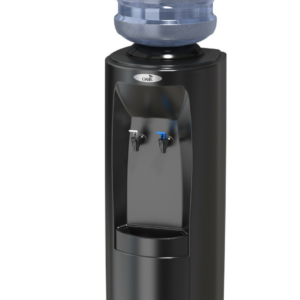
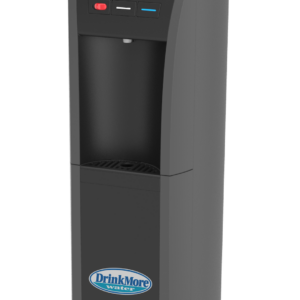
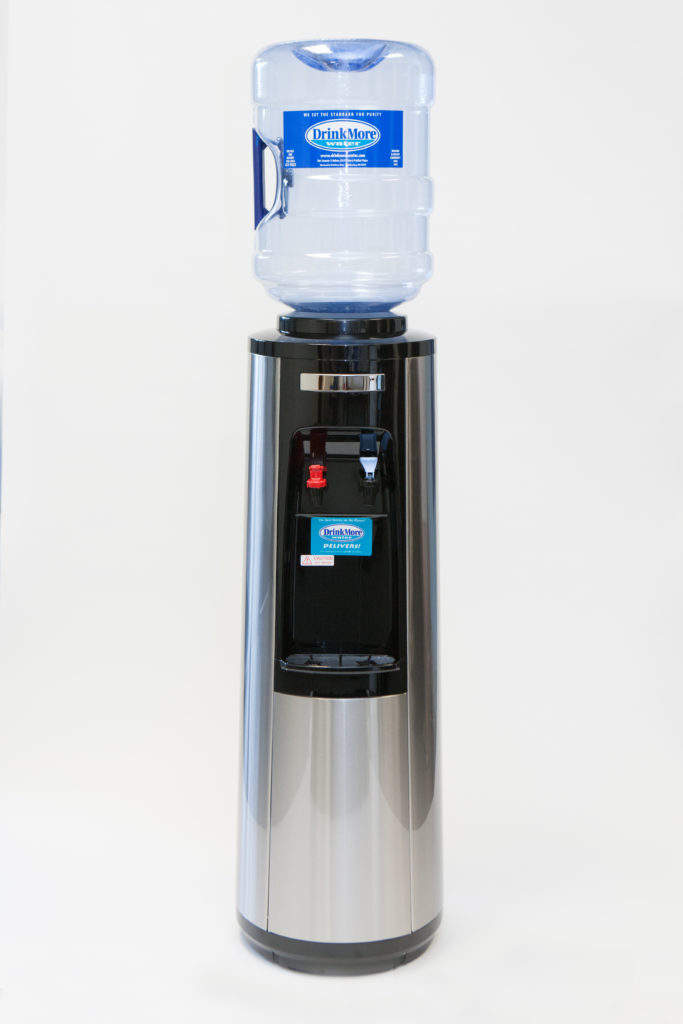
Our home water delivery service brings it to households across DC, Maryland, and Northern Virginia on a schedule you set. Our bottleless water coolers connect to your existing line — a good option for offices, where keeping cold water within arm’s reach of a desk does more for daily intake than any reminder app. Both are at DrinkMore Water. For events, conferences, and branded bottles, DrinkMore Custom Water offers the same water under custom labels.
Our complete independent Eurofins lab report is published on our water analysis page.
The Bottom Line on Drinking More Water
The benefits of drinking more water are real where dehydration exists: better physical performance, sharper cognition, healthier kidney function, easier digestion, and effective temperature regulation. Adults need roughly 2.7 to 3.7 liters of total daily fluid, including water from food and other beverages.
The claims worth discounting are weight loss, detoxification, better skin, and boosted metabolism. Hydration restores normal function; it doesn’t add capability beyond it. The single highest-value move for most people isn’t drinking more water in absolute terms — it’s replacing sugary drinks with water you actually enjoy.
General wellness information, not medical advice. If you have kidney disease, heart failure, or take medications affecting fluid balance, follow your physician’s guidance on fluid intake.
Frequently Asked Questions
How much water should I drink each day?
The National Academies suggest roughly 15.5 cups (3.7 liters) of total daily fluid for men and 11.5 cups (2.7 liters) for women. This includes water from food and all beverages, not just plain water — food contributes around 20%. Needs vary with body size, activity, climate, pregnancy, and health conditions.
Does drinking more water help you lose weight?
Only modestly and indirectly. Water has no calories, and drinking before meals may slightly reduce intake in some studies, though results are inconsistent. The meaningful effect comes from substitution: replacing sugary drinks with water cuts calories. Water itself is not a weight-loss intervention.
What are the first signs of dehydration?
Urine color is the earliest practical indicator — dark yellow or amber suggests you need more fluid, while pale yellow suggests adequate hydration. Thirst, fatigue, difficulty concentrating, afternoon headache, and dry mouth follow. Confusion, dizziness, or rapid heartbeat indicate significant dehydration requiring medical attention.
Can drinking too much water be dangerous?
Yes, though it’s uncommon. Consuming large volumes rapidly can dilute blood sodium, causing hyponatremia, with symptoms from nausea and headache to confusion and seizures. This has occurred in endurance athletes and drinking challenges. It’s not a concern at ordinary intake for healthy adults with normal kidney function.
Does coffee or tea count toward hydration?
Yes. Despite the common belief that caffeinated drinks are dehydrating, research shows moderate coffee and tea consumption contributes net positively to daily fluid intake. The diuretic effect of caffeine at typical doses is smaller than the fluid volume consumed. Both count toward total daily fluid.
Does the type of water affect hydration?
No. Tap, purified, spring, mineral, and alkaline water hydrate equally well. The indirect effect is what matters: people drink more water they enjoy the taste of. Removing chlorine and dissolved metals improves taste, which for many people meaningfully increases how much they actually drink.
Your Logo Belongs On This Water
The same purified water you just read about, with your brand on the front. Bottles or cans, delivered across Maryland, DC and Virginia.
What to Expect
Discover the Difference

30 years Experience

Fast Turnaround Time

Excellent Customer Service

State-Of-The-Art Purification

Made in the USA

Delivered to you!
Testimonials

“10 out of 10. Delivery guy is the best!”
“Excellent water, excellent service all around! Have been using them for years.”
“Very reliable company. Delivers as promised.”
“Everyone here is always nice and accommodating. Never waited and I get unloaded quickly.”

Request Form
We would love to hear from you! Please fill out this form and we will get in touch with you shortly.